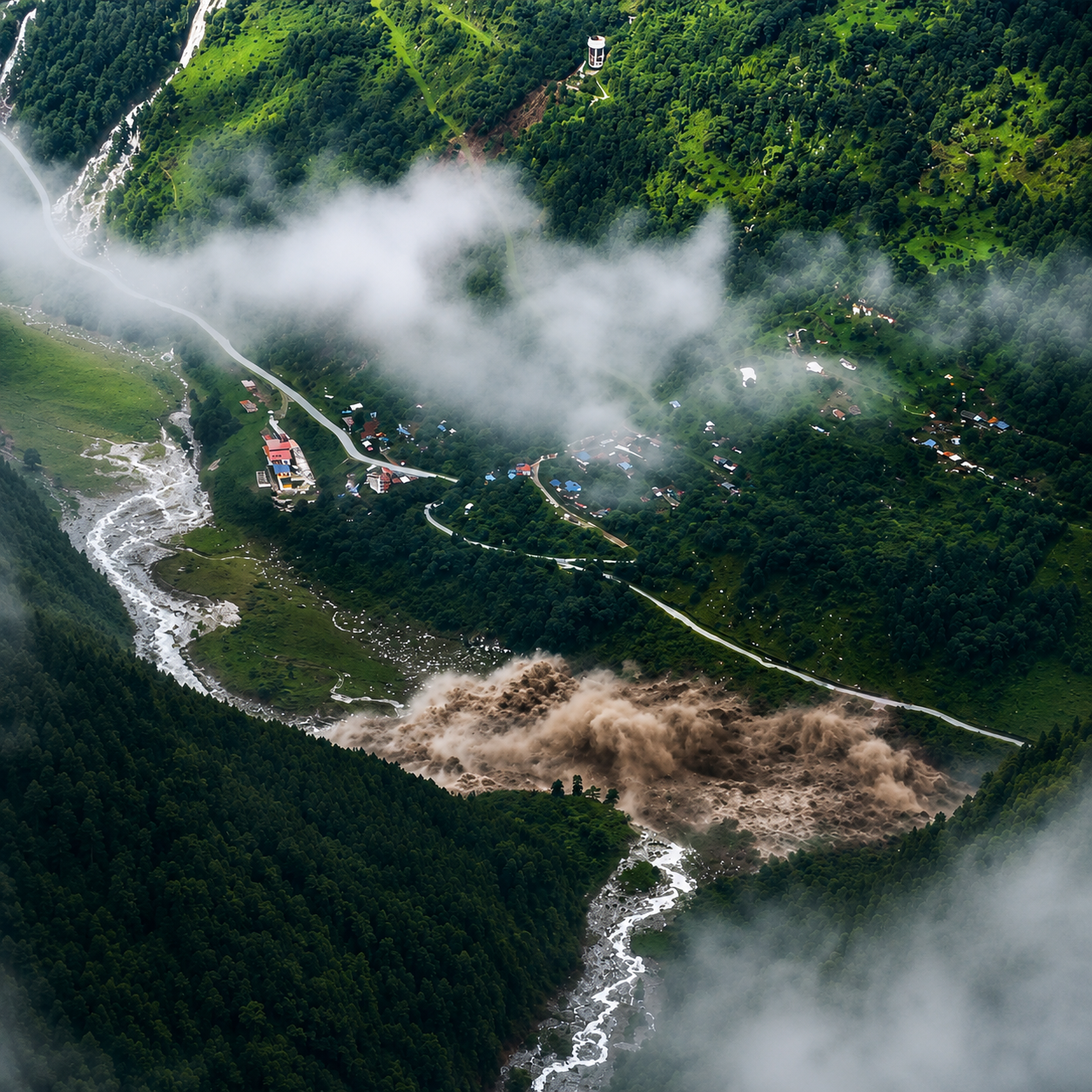
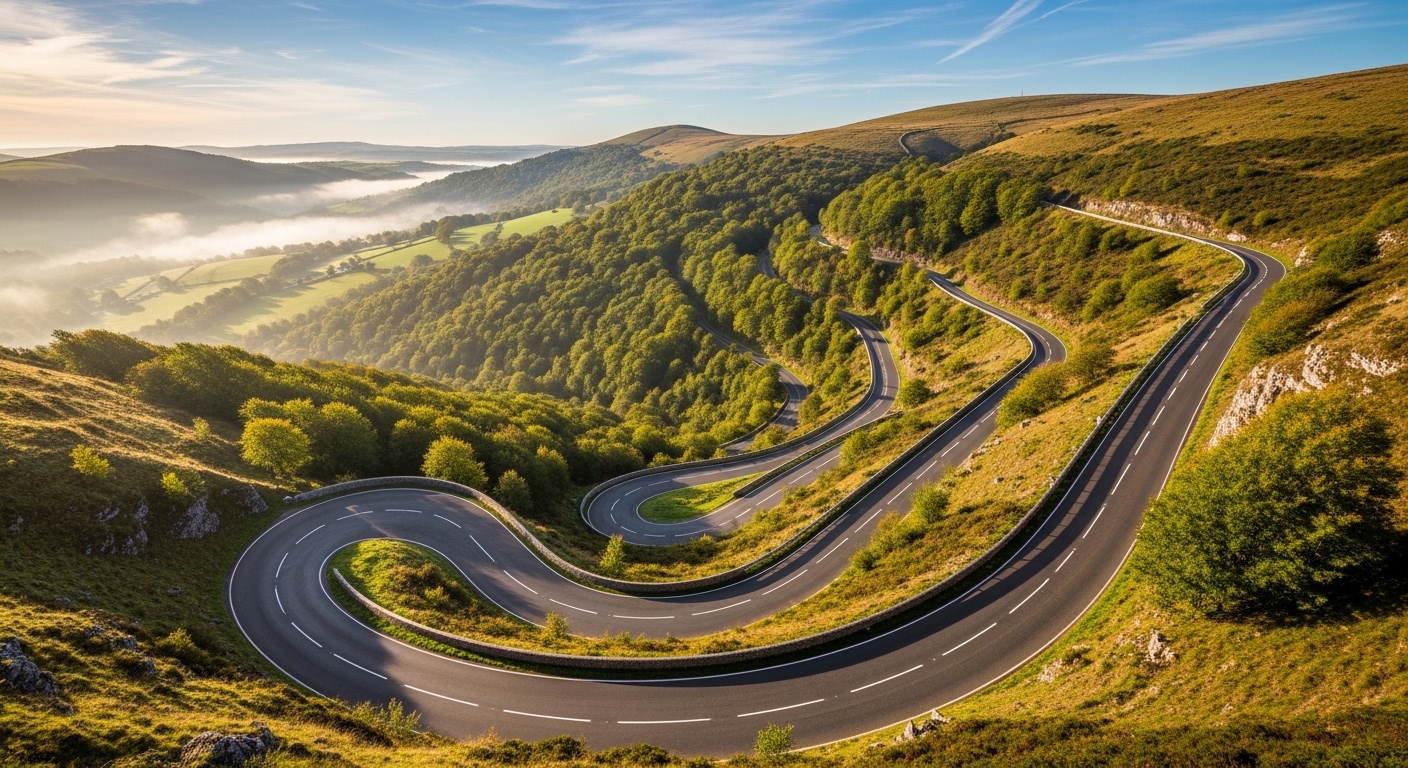
Most roads take you where you’re going. Zig Zag Hill makes you earn it.
Tucked into the North Dorset hills near Shaftesbury, Zig Zag Hill is widely regarded as the most winding one-mile stretch of road in the United Kingdom. Four hairpin bends, a gradient that touches 13%, and views from the summit that stretch across Dorset and Wiltshire into the distance. It is, by any reasonable standard, a remarkable piece of road and far too few people know it exists.
Whether you’re planning a road trip through the English countryside, a cycling challenge that feels Alpine without the flights, or simply a scenic stop with a view worth the climb, this guide covers everything you need to know about Zig Zag Hill in 2026.
What Is Zig Zag Hill?
Zig Zag Hill forms part of the B3081, a secondary road that runs through the North Dorset countryside near the market town of Shaftesbury. The hill starts at the village of Cann Common at its base and climbs to a ridge above, near Wingreen Hill the highest point in Dorset. The distance is just over a mile. The experience feels considerably longer.
What makes it exceptional in a British context is the hairpins. England is not a hairpin country. Most British hills are conquered by straight climbs or gentle switchbacks. Zig Zag Hill is an outlier: its three to four near-180-degree hairpin turns are continental in character, engineered in a style far more commonly found in the French Alps or Italian Dolomites than in Dorset. The road has been compared, with some affection and only slight exaggeration, to Col de Turini the famous Alpine pass that features in the Monaco section of the World Rally Championship.
The road was resurfaced in 2019, giving it a smooth, well-maintained surface that benefits both drivers and cyclists equally.
The History Behind the Hairpins
Hairpin-style road engineering is not accidental. It is the solution to a specific problem: how do you move people, goods, and vehicles up a steep hill without requiring them to climb in a straight vertical line? The hairpin distributes elevation gain across a longer horizontal distance, reducing the effective gradient to something a horse-drawn cart or a laden cyclist can actually manage.
In England, most roads were laid on pre-existing packhorse routes or drovers’ paths, which tended to attack hills directly. The presence of genuine Alpine-style hairpins at Zig Zag Hill points to a deliberate engineering decision, likely made in the Victorian or Edwardian era, when horse-drawn transport still dominated rural roads and the ability to descend a steep hill without runaway wheels was a genuine safety concern. The exact construction date is not widely documented, which itself represents a content gap that local historians have yet to fill and a reason this road remains more obscure than it deserves to be.
What is clear is that the road became a landmark long before it became a social media curiosity. Locals have navigated it for generations. Cyclists discovered it decades ago. The rest of the country is only now catching up.
Driving Zig Zag Hill: What to Expect
The Approach from Cann Common
If you’re approaching from the south via Cann Common, the hill begins deceptively. The first stretch rises gently, and the road feels like any other Dorset lane. Then the first hairpin arrives. It is sharp, it is narrow, and if you haven’t seen it before, it will concentrate your attention immediately.
The steepest section of the climb comes early the gradient briefly exceeds 10% near the base before the hairpins smooth it out. This is the counterintuitive genius of hairpin road design: by zigzagging across the hillside, the effective gradient through each bend becomes more manageable even as the overall elevation gain continues.
Descending: The Greater Challenge
Most drivers find the descent harder than the ascent. Going down, the hairpins appear faster. Your forward visibility through each bend is severely limited. Headlights at night point into the trees rather than illuminating the road ahead a documented issue that makes night driving on Zig Zag Hill genuinely demanding for anyone unfamiliar with the bends.
Engine braking is your friend on the descent. Select a lower gear before you need to slow down, not after. This preserves your brakes and keeps your vehicle stable through the sharp corners. Avoid riding the brake pedal continuously it generates heat that can reduce braking effectiveness on a long descent.
An Important Warning for First-Time Visitors
TripAdvisor reviews for Zig Zag Hill reveal a pattern worth flagging: a significant number of visitors arrive completely unprepared because their satellite navigation routed them via the B3081 without any warning. One reviewer described being in a people carrier when a juggernaut appeared around a hairpin a 20-minute negotiation followed before both vehicles could pass.
If you are driving a large vehicle, towing, or simply unfamiliar with tight hairpin roads, check your route before departure and be prepared. The road is entirely legal for standard vehicles but demands full attention and appropriate speed at all times.
Cycling Zig Zag Hill: Dorset’s Mini Alpe d’Huez
The cycling community discovered Zig Zag Hill long before it made mainstream travel headlines. The combination of consistent gradient, smooth tarmac, and three genuine hairpins makes it one of the most technically interesting climbs in southern England and one of the most rewarding.
The numbers tell a clear story. The climb runs approximately 3.8 kilometres with a maximum gradient of 15% and an average that stays below 10% through the hairpin sections. It is not the longest climb in England, nor the steepest. But the hairpins back-to-back, tight, genuinely Alpine in character create a rhythm and challenge that no straight gradient can replicate.
In October 2025, Zig Zag Hill hosted its first official cycling hill-climb event, organized by the Cycling Time Trials association. The event attracted cyclists from across the UK, featured a £1,000 prize pot, and established what its organiser Elliott Colyer a 21-year-old physics graduate who launched the event fresh out of university called ‘Dorset’s mini Alpe d’Huez’ on the UK cycling calendar. Expect the event to grow.
For training cyclists, Zig Zag Hill works best as a repeat-effort climb. The descent is technical enough to provide useful bike-handling practice; the ascent is short enough to allow multiple laps in a single session. The road sees relatively light motor traffic outside of peak summer weekends, making it a practical training location as well as a scenic one.
The View from the Top
The climb is the reason to come. The view is the reason to stop.
From the summit ridge near Wingreen Hill, the panorama extends across the Dorset National Landscape formerly the Cranborne Chase Area of Outstanding Natural Beauty and on clear days reaches across the Wiltshire border into multiple counties. The rolling chalk downland, the patchwork of farmland, the distant ribbon of the Dorset coast: it is the kind of view that makes England’s rural landscape feel genuinely spectacular.
There is a small parking area at the top where you can pull over safely. National Trust land surrounds the summit. The walk from the parking area to Wingreen Hill itself takes only a few minutes and adds an aerial dimension to the view that the road alone cannot provide.
Photography tip: the best light is in the early morning, when the low-angle sun catches the chalk grassland of Cranborne Chase from the east. Late afternoon in autumn, when the surrounding beech trees are in full colour, runs it very close.
Zig Zag Hill vs Box Hill’s Zig Zag Road: The Comparison
Two famous ‘zig zag’ roads exist in England, and they are frequently confused. Here is how they compare:
| Feature | Zig Zag Hill (Dorset) | Box Hill Zig Zag Road (Surrey) |
| Location | Shaftesbury, North Dorset | Tadworth, Surrey |
| Length | ~1 mile (1.6 km) | 4.1 miles (6.59 km) |
| Max Gradient | 13–15% | ~10% |
| Hairpins | 3–4 tight hairpins | Gentler curves, fewer hairpins |
| Cycling Fame | 2025 hill-climb debut | 2012 London Olympics road race |
| Difficulty | Technical, demanding | Challenging but accessible |
| Nearby Attraction | Gold Hill, Shaftesbury | Box Hill National Trust café |
| Verdict | Best for thrill-seekers | Best for high volume & accessibility |
Both roads are worth experiencing. They serve different audiences. Box Hill’s Zig Zag Road is more accessible, better known, and easier to combine with a day trip from London. Zig Zag Hill in Dorset is more demanding, more dramatic, and far less crowded which, depending on your preferences, makes it the better choice.
What’s Nearby: Making a Day of It
Zig Zag Hill alone is worth the detour. Combined with what surrounds it, it becomes the anchor for a genuinely excellent day out in North Dorset.
- Gold Hill, Shaftesbury:England’s most photographed cobbled street, made famous by the 1973 Hovis advertisement. A 10-minute drive from the base of Zig Zag Hill. The descent of Gold Hill on a bicycle is a rite of passage.
- Ashmore Village:The highest village in Dorset, with a central duck pond and thatched cottages. Five miles from Zig Zag Hill and a world away from tourist trails.
- Cranborne Chase:The surrounding Area of Outstanding Natural Beauty offers walking and cycling routes across chalk downland with near-360-degree views from the ridge paths.
- Shaftesbury Town Centre:An ancient hilltop market town with independent shops, cafés, and the ruins of Shaftesbury Abbey the burial place of King Edward the Martyr.
Best Time to Visit Zig Zag Hill
| Season | Driving | Cycling | Photography |
| Spring (Mar–May) | ✅ Ideal- dry, light traffic | ✅ Ideal – cool temps, good grip | ✅ Bluebells and fresh green |
| Summer (Jun–Aug) | ⚠️ Busier- tourist traffic | ⚠️ Hot – carry water | ✅ Long golden hours |
| Autumn (Sep–Nov) | ⚠️ Leaves = slippery hairpins | ✅ Cooler, ideal temps | 🏆 Peak season – colour spectacular |
| Winter (Dec–Feb) | ❌ Ice risk- caution essential | ❌ Unsafe – ice on hairpins | ⚠️ Low light, clear days reward |
Frequently Asked Questions
Where exactly is Zig Zag Hill?
On the B3081 near Shaftesbury, North Dorset. Postcode: SP7 0EL. It starts at Cann Common and climbs to the ridge near Wingreen Hill.
Is Zig Zag Hill suitable for large vehicles?
Standard cars handle it without problems. Large vehicles, motorhomes, and vehicles towing trailers should proceed with caution passing a large vehicle on a hairpin requires patience and careful communication. Several visitor accounts report encountering lorries on the bends.
Is there parking at Zig Zag Hill?
Yes a free parking area is available at the summit. It is small, so arrive early on summer weekends.
Is Zig Zag Hill free to visit?
Completely free. The road is a public highway. Parking at the summit is also free.
Final Verdict: Is Zig Zag Hill Worth It?
Yes. Without qualification.
In a country where truly dramatic roads are rare, Zig Zag Hill is the closest most drivers and cyclists will come to an Alpine experience without leaving England. It is short, steep, technically demanding, visually stunning at the top, and surrounded by some of the most unspoiled countryside in the South West.
Whether you approach it on two wheels or four, in sunshine or autumn mist, arriving prepared or like many visitors guided there by a satellite navigation system that gave no warning whatsoever, Zig Zag Hill delivers. Slow down before the hairpins. Use a lower gear on the descent. Stop at the top and look at the view. You have earned it.
For road conditions and travel planning, the Dorset Council roads website provides current information on the B3081 and surrounding routes.
Also Read
Holisticke Explained: Meaning, Benefits & How It Improves Your Lifestyle
Learn what Holisticke really means, how it connects mind, body, and lifestyle, and why it’s becoming a popular wellness trend.