
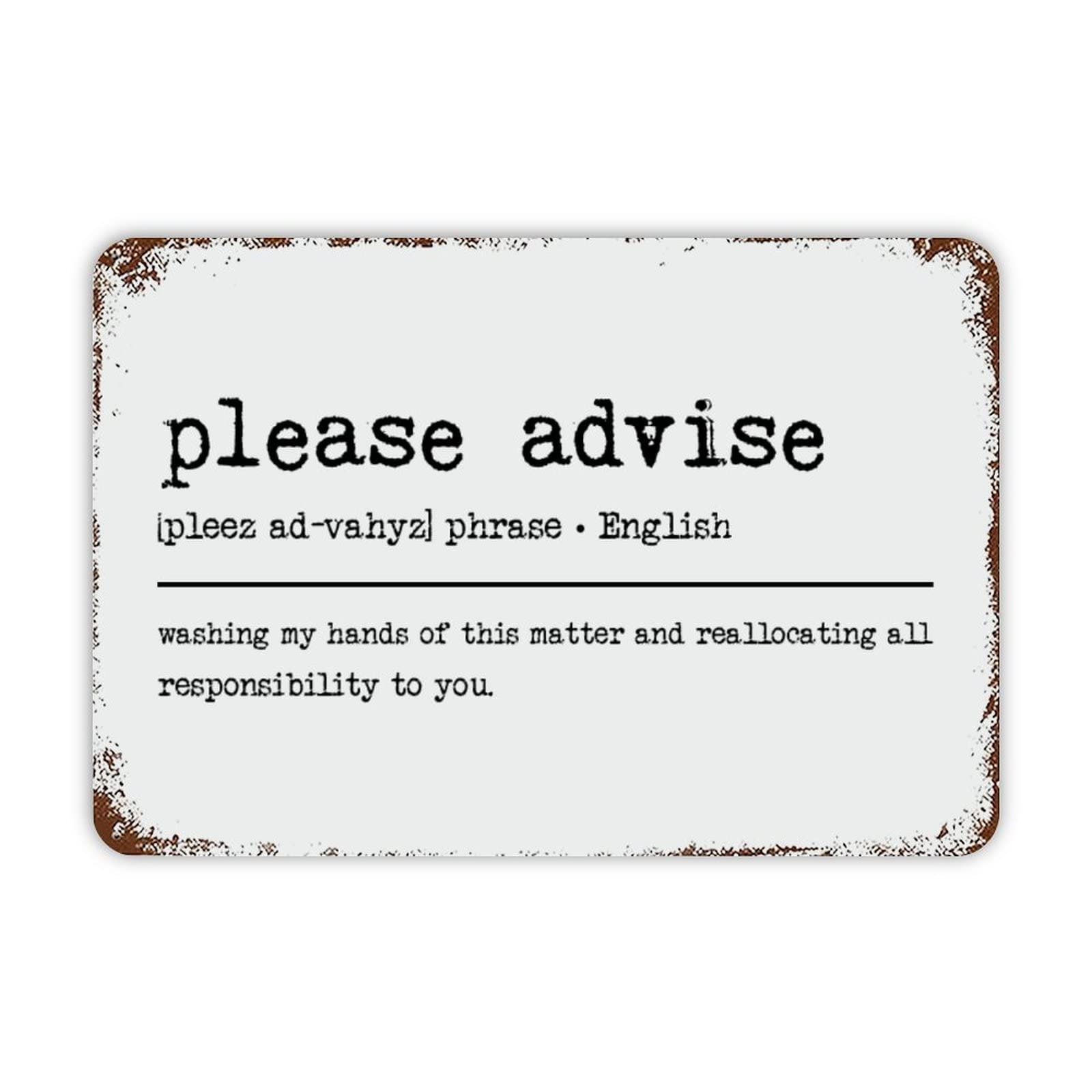
The Two Words Dividing the Workplace
You’ve seen it at the bottom of emails. Maybe you’ve written it yourself. Two simple words ‘please advise’ that somehow manage to mean a dozen different things depending on who’s reading them and what mood they’re in.
To some, it’s a polite, efficient way to ask for guidance. To others, it’s the email equivalent of a passive-aggressive eye-roll.
So what does please advise meaning actually come down to? Is it professional or tone-deaf? Formal or just lazy? And when should you use it or avoid it entirely?
This guide answers all of those questions. We’ll break down the exact meaning, dig into the surprisingly heated debate around the phrase, walk you through when it works and when it backfires, and give you smarter alternatives to use instead.
What Does ‘Please Advise’ Mean?
At its core, please advise is a professional phrase used in emails to request guidance, a decision, or a response from the recipient. That’s the clean definition.
But the real-world please advise meaning is more flexible and that’s part of the problem. Depending on context, it can mean:
- “What should I do next?”
- “I need a decision from you before I move forward.”
- “Can you clarify something for me?”
- “What are your thoughts on this?”
According to Cambridge Dictionary, the verb ‘advise’ means to give someone a recommendation or counsel it’s an action word. So ‘please advise’ is literally a polite command asking someone to perform that act of giving guidance.
The phrase is most common in corporate emails, customer service communications, and formal business correspondence. It’s short, it’s functional, and it signals that the sender is waiting on someone else before proceeding.
‘Please Advise’ vs. ‘Please Advice’ – A Grammar Note Worth Making
Before we go further, let’s settle a common confusion that shows up constantly in search data: advise vs. advice.
- Advise (verb) – an action: ‘Please advise me on the next steps.’
- Advice (noun) – a thing: ‘Your advice was really helpful.’
‘Please advice’ is grammatically incorrect in this context. You cannot please a noun. Always write please advise when asking someone to provide guidance. Some spellcheckers may flag ‘advise’ as an error in this context, suggesting it needs a direct object but the intransitive use (‘please advise’) is completely valid in professional English.
Is ‘Please Advise’ Passive-Aggressive? The Research Says… Maybe.
Here’s where things get interesting.
A study by word game site WordFinder which combined data from Ahrefs and Google AdWords to analyze the most commonly used workplace phrases found that ‘please advise’ ranked as the number one phrase that feels passive-aggressive to colleagues and coworkers. The research was covered by Inc. Magazine and has sparked ongoing debate in HR circles and professional development communities.
Why does a two-word phrase carry so much emotional baggage?
Penn Foster’s career communications experts explain it well: “When you’re writing ‘please advise,’ you may be genuinely asking for advice on the matter. However, the reader can see it as you saying ‘let me know,’ or even passive-aggressively telling them they did something wrong.”
In other words, the phrase is ambiguous and ambiguity breeds assumption. When there’s no clear ask, the recipient fills in the blank with tone. And if there’s any pre-existing tension in the working relationship? That blank gets filled in very uncharitably.
That said, context is everything. In logistics, legal, and customer service environments, ‘please advise’ is a standard, neutral phrase with no emotional charge whatsoever. A shipping coordinator writing ‘the vessel will be delayed 72 hours please advise’ is simply delegating a decision. There’s nothing passive-aggressive about it.
The lesson: the phrase itself isn’t inherently problematic. How and when you deploy it makes all the difference.
When to Use ‘Please Advise’- And When to Avoid It
Use it when:
- Your request is already specific and clear in the email body
- You’re writing to someone who clearly holds the decision-making authority
- The email environment is formal (legal, finance, logistics, executive correspondence)
- You’re adding it after presenting two clear options: ‘Here are the two proposed timelines please advise which you prefer.’
Avoid it when:
- Your email is vague or doesn’t specify what kind of response you need
- The working relationship is already strained the phrase will read as cold or confrontational
- You’re writing in a casual team environment (Slack, internal chat, or a startup culture setting)
- A more direct ask would be clearer: say what you need instead of hinting at it
A helpful rule of thumb: if you’re reaching for ‘please advise’ out of frustration if you’re mentally sighing as you type it that’s a signal to rewrite the email. Your emotion is leaking into the phrasing, and the recipient will feel it.
How to Respond When Someone Says ‘Please Advise’
Most articles on this topic focus on the sender. But what about the recipient? If someone ends an email to you with ‘please advise,’ here’s how to handle it effectively:
- Read the full email carefully not just the closing line. The ‘please advise’ is rarely the actual question. The question is somewhere in the body.
- Identify what kind of input is needed. Are they asking for a decision? Clarification? Permission? Your opinion? Tailor your response to match.
- Respond directly. Don’t mirror vague language with more vague language. If they asked for next steps, give them next steps. If you need more time, say so specifically: ‘I’ll have an answer for you by Thursday EOD.’
- If the request is genuinely unclear, ask one targeted follow-up question not five. Example: ‘Are you looking for my recommendation on the vendor, or do you need a final decision from management?’
Better Alternatives to ‘Please Advise’
Tired of the phrase? Here are more specific, less ambiguous options that do the same job without the emotional baggage. Choose based on what you actually need:
When you need a decision:
- “Could you let me know which option you prefer?”
- “Please confirm how you’d like us to move forward.”
When you need clarification:
- “Could you clarify the next steps on your end?”
- “I’d appreciate any guidance you can share before I proceed.”
When you need an opinion:
- “What are your thoughts on this?”
- “I’d love to get your perspective before finalizing.”
When you’re waiting on direction:
- “Please let me know how you’d like me to handle this.”
- “I’m standing by for your direction on this matter.”
The goal with any of these alternatives is specificity. Tell the recipient exactly what kind of response you need. That clarity reduces friction and gets you a faster, better answer.
‘Please Be Advised’ vs. ‘Please Advise’ – Not the Same Thing
One more distinction worth making: please be advised and please advise are frequently confused, but they work in completely opposite directions.
- Please be advised = one-way notification. “Please be advised that the office will be closed on Friday.” No response required.
- Please advise = request for input. “We’ve received two conflicting invoices please advise.” A response is expected.
Using them interchangeably creates miscommunication. If you need a reply, don’t use ‘please be advised’ that signals the matter is informational only.
The Bottom Line
The please advise meaning is simple enough: it’s a request for guidance, a decision, or a response. But its impact? That depends entirely on context, tone, and the clarity of your ask.
Used deliberately, in the right environment, with a clear setup it works. Used reflexively, at the end of a vague or tense email it can land poorly, triggering defensiveness or annoyance in the recipient.
The fix is never about banning the phrase. It’s about being intentional. Know what you’re asking for. Say it clearly. And if ‘please advise’ does that job in your context go ahead and use it.
Frequently Asked Questions
What does ‘please advise’ mean in an email?
It means the sender is asking the recipient for guidance, a decision, or clarification before moving forward. It’s a common closing phrase in formal professional emails.
Is ‘please advise’ rude?
Not inherently but it can come across as passive-aggressive when used without context or in a tense situation. Research shows it’s one of the most commonly perceived passive-aggressive workplace email phrases.
Should I write ‘please advise’ or ‘please advice’?
Always write ‘please advise.’ ‘Advise’ is a verb; ‘advice’ is a noun. ‘Please advice’ is grammatically incorrect.
What are good alternatives to ‘please advise’?
Try: ‘Could you let me know how you’d like to proceed?’, ‘I’d appreciate your guidance on this’, or ‘Please confirm the next steps.’ These alternatives are clearer and less open to misinterpretation.
What’s the difference between ‘please advise’ and ‘please be advised’?
‘Please advise’ asks for a response; ‘please be advised’ delivers information without expecting a reply. They serve opposite purposes.
First Come First Served — Meaning, Examples & Real-Life Uses
Don’t get confused again—learn exactly how “first come, first served” works with simple examples and real situations.