
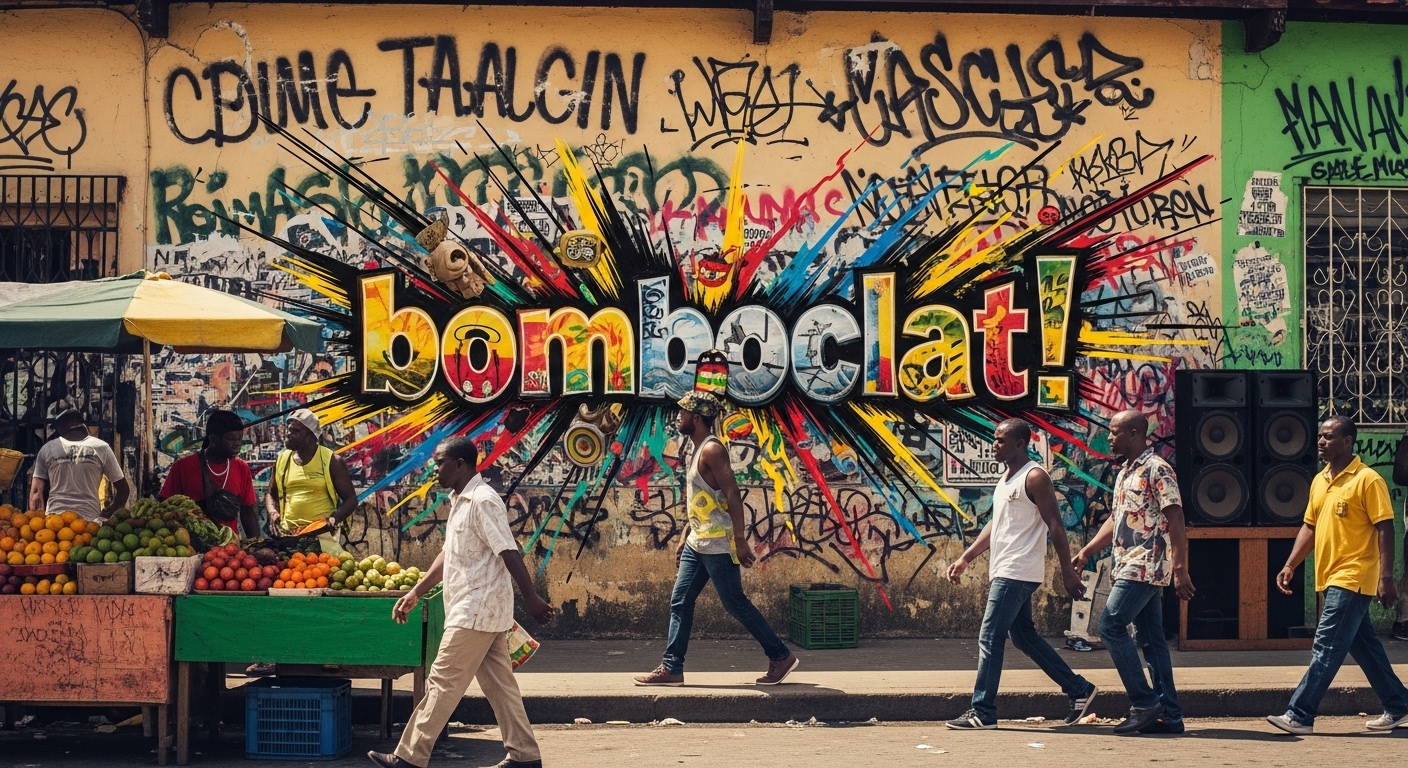
You’ve seen it in a tweet. Spotted it under a meme. Heard it in a song. And every time, you’ve probably done a quick double-take. What exactly is bomboclat and why does the internet can’t seem to get enough of it?
Here’s the short answer: bomboclat is one of the most versatile, culturally rich, and wildly misunderstood words to ever escape its country of origin and conquer the global internet. It’s a Jamaican Patois expletive with deep historical roots, a fascinating journey through reggae music and diaspora culture, and a second life as one of the defining memes of 2019.
But the real story is so much more interesting than ‘it’s a Jamaican swear word.’ This guide breaks down the bomboclat meaning in full its etymology, evolution, correct usage, cultural controversies, all spelling variants, and why it matters in 2026’s digital landscape. Let’s get into it.
What Does Bomboclat Mean? (The Direct Answer)
Bomboclat (also spelled bumboclaat, bumbaclot, or bomboclaat) is a Jamaican Patois expletive used to express strong emotion anger, shock, disbelief, frustration, or even impressed surprise. In Jamaican culture, it carries roughly the same weight and versatility as the f-word does in American English.
According to Merriam-Webster, which officially added the word to its dictionary, bomboclat functions as a noun, adjective, and interjection much like many English profanities. Its literal meaning is ‘bottom cloth,’ derived from ‘bumbo’ (a coarse Patois term for buttocks or female genitalia) and ‘claat’ (cloth). That literal origin referencing a sanitary or menstrual cloth is precisely what gave it such taboo force in Jamaican culture.
Online, however, bomboclat has taken on an entirely different life. Starting in 2019, it became a viral meme format on Twitter and quickly spread to TikTok, Instagram, and beyond often used by people who had no idea what the word originally meant.
The Spelling Variants: Which One Is Correct?
One of the biggest sources of confusion is spelling. Here are the most common variants and what you should know about each:
- bomboclat – Most common in American internet slang; Merriam-Webster’s official entry
- bumboclaat – Closest to the Jamaican Patois pronunciation; preferred by many Jamaicans
- bumbaclot / bumbaclaat – Frequently used on Dictionary.com and in Caribbean communities
- bomboclaat – The spelling that went viral in the 2019 Twitter meme
- bumboclot / bumboclat – Less common variants, same meaning
All of these spellings refer to the same word. The variation exists because Jamaican Patois was primarily an oral language it wasn’t standardized in written form for much of its history, so regional and personal preference shaped how people spelled it when writing emerged.
The Origin Story: Where Did Bomboclat Come From?
To understand bomboclat, you have to understand Jamaican Patois (also called Patwa or Jamaican Creole). Patois emerged from the brutal history of Caribbean slavery African slaves on the island blended elements of English, West African languages, and other influences to create a new tongue that was their own, one their colonizers couldn’t fully access or control.
The ‘claat’ family of words which includes bloodclaat, rasclaat, and bomboclat all follow the same formula: a taboo body reference combined with ‘claat’ (cloth). Their power came from their association with bodily functions and fluids that were considered deeply shameful in the social norms of the era. These words became the strongest expletives in Jamaican speech.
According to Dictionary.com, the word bumbaclot has been in use since at least 1956, though it was likely spoken long before that. It spread through Jamaica’s booming music scene reggae and dancehall artists used it openly in lyrics as an expression of raw emotion, rebellion, and street authenticity. Artists like Beenie Man and Vybz Kartel helped carry these words into global music culture.
By the 1980s and 1990s, as Jamaican immigration shaped neighborhoods in London, New York, and Toronto, these words filtered into new cultural contexts. When Toronto Mayor Rob Ford addressing a scandal in 2014 used the word in a rant that was caught on video, it made headlines globally. Most of the world didn’t know what it meant, but they knew it was serious.
The 2019 Twitter Moment That Changed Everything
Then came September 3, 2019. A Twitter user named @rudebwoy_lamz posted two images from the Nickelodeon cartoon CatDog, featuring the character Winslow Thelonious Oddfellow, with a single-word caption: ‘Bomboclaat.’
The post exploded. Over 13,000 likes and thousands of retweets in weeks. The format spread like wildfire users began posting random, funny, or surreal images with ‘Bomboclaat’ as the caption, inviting followers to react or provide context. It functioned like a ‘caption this’ challenge, except with a mysterious, foreign-sounding word that gave it extra comedic punch.
The irony? Most people using it had no idea what it actually meant. Many confused it with ‘sco pa tu manaa,’ another viral Ghanaian phrase that had been circulating earlier that year as a nonsense caption challenge. Jamaican Twitter users pushed back hard pointing out that bomboclaat was not a neutral phrase, not a greeting, and absolutely not a synonym for ‘caption this.’
As Know Your Meme documents, Jamaican Twitter users explicitly called out the misuse: ‘The term bumboclaat does not mean what you think it does. It is not a greeting, a question, or a means of asking one’s opinion. It is an expletive.’ But the train had left the station. The meme format was too catchy, too versatile, and too widely shared to stop.
Merriam-Webster later noted that bomboclat’s viral spread likely influenced the broader wave of Gen Alpha ‘brainrot’ internet slang including terms like gyatt, skibidi, and Fanum tax that dominated social media through 2023 and 2024.
How Bomboclat Is Used Today
In 2026, bomboclat exists in two distinct registers:
In Jamaican & Caribbean Culture
Bomboclat remains a serious profanity. Using it casually around Jamaican elders or in formal settings is genuinely offensive. It carries the emotional weight of extreme frustration, anger, or disgust. In music, it’s a marker of intensity used by artists to signal authentic street credibility.
In Internet Culture
Online, bomboclat functions as a reaction word expressing shock, disbelief, or impressed awe. You’ll see it in:
- Twitter/X captions on surprising or absurd content
- TikTok comment sections reacting to plot twists or stunning videos
- Instagram memes and reels
- Group chats among Gen Z friends using it humorously
It can be positive (‘Bomboclat, that fit is clean’), negative (‘Bomboclat, what is she doing?’), or purely neutral surprise. Context and tone determine everything.
The Cultural Appropriation Question
This is the part most bomboclat articles skip. Let’s not.
When a word rooted in a marginalized culture’s history goes viral, it sparks a legitimate debate. Many Jamaicans have expressed a complex mix of reactions to the worldwide bomboclat trend. Some find it flattering that Jamaican Patois is being heard globally. Others particularly older generations and cultural advocates feel frustrated that one of their culture’s strongest expressions was turned into a punchline by people who don’t understand its weight.
The dynamic mirrors similar debates around other Black and Caribbean linguistic exports: AAVE (African American Vernacular English), for example, has faced decades of mainstream adoption without credit. When non-Black content creators adopt Black slang for engagement without acknowledging its source, it can feel extractive.
The guidance from cultural commentators is consistent: use it with awareness, not performance. If you’re going to use bomboclat in a meme, in writing, in conversation know where it comes from. Don’t pair it with Jamaican accent imitations or cultural stereotypes. And if you’re a brand, think twice about whether you’re celebrating the culture or simply mining it for clicks.
Bomboclat in Music and Pop Culture
Long before Twitter, bomboclat was woven into the fabric of Jamaican music. Dancehall and reggae artists used it as a punctuation mark of emotion a verbal exclamation point in lyrics about struggle, love, hustle, and defiance. The word appears in tracks going back decades, functioning as an authentic cultural marker that signals the artist’s Jamaican roots and street credibility.
As Jamaican artists like Shaggy, Sean Paul, and later Vybz Kartel and Popcaan brought Caribbean sounds to global stages, these linguistic traditions traveled with them. By the time bomboclat landed on Twitter in 2019, it had already spent 60+ years permeating global music culture quietly. The meme just turned the volume to max overnight.
Should You Use Bomboclat?
That depends entirely on your context:
- With Jamaican or Caribbean friends who use it themselves: Probably fine in the right tone
- As a meme caption among internet-savvy peers: Generally harmless in the meme-culture sense
- In formal, professional, or mixed cultural settings: Absolutely not
- While imitating a Jamaican accent: A hard no this crosses into mockery
- As a brand trying to go viral: Proceed with extreme caution and cultural consultation
The golden rule? Know what you’re saying before you say it. That’s true of any borrowed language.
Frequently Asked Questions About Bomboclat
Q: What does bomboclat mean?
A: Bomboclat is a Jamaican Patois expletive meaning ‘bottom cloth.’ It’s used like the f-word in Jamaican culture expressing anger, shock, or frustration. Online since 2019, it became a viral meme reaction word used humorously.
Q: Where does bomboclat come from?
A: It originates from Jamaican Creole, combining ‘bumbo’ (bottom) and ‘claat’ (cloth). Documented since the 1950s, it spread globally through reggae, dancehall music, and eventually social media.
Q: Is bomboclat a bad word?
A: In Jamaica and Caribbean communities, yes it’s considered a serious profanity. In internet culture, it has softened into a humorous meme expression, but can still be offensive depending on context and audience.
Q: When did bomboclat go viral?
A: September 2019, when a Twitter user captioned a CatDog cartoon image with ‘Bomboclaat.’ The post went viral instantly, spawning a massive meme format that spread across Twitter, TikTok, and Instagram.
Q: How do you spell bomboclat?
A: Common spellings include: bomboclat, bumboclaat, bumbaclot, bomboclaat, and bumbaclot. All refer to the same word variation exists because Jamaican Patois was historically oral, not standardized in writing.
Q: What is the difference between bomboclat and bloodclaat?
A: Both are Jamaican Patois expletives in the ‘claat’ family. Bloodclaat (blood + cloth) is generally considered the most vulgar, specifically associated with menstrual blood. Bomboclat is slightly less intense but still a strong profanity.
Q: Can non-Jamaicans use bomboclat?
A: Technically yes, but thoughtfully. Many Jamaicans feel the word is misused when stripped of its cultural context. If you use it, understand its roots, avoid accent imitations, and don’t use it to mock Jamaican culture.
Q: Is bomboclat still used in 2026?
A: Yes. While its peak viral moment was 2019–2020, it remains recognizable internet slang and continues to appear in memes, TikTok comments, and social media captions especially as a nostalgic throwback to that meme era.
The Bottom Line
Bomboclat is far more than a funny internet word. It’s a piece of living linguistic history forged in the Caribbean, carried through music and migration, and catapulted into global pop culture by the speed of social media. Understanding it means understanding how language evolves, how cultures interact online, and how a single tweet can turn a 70-year-old expletive into a global phenomenon overnight.
Whether you encountered it on your For You page, in a group chat, or in a reggae deep cut, you now know the full story. Use that knowledge wisely and maybe listen to some dancehall while you’re at it.
YN Meaning in Slang — What It Really Means on TikTok & Text
Confused by “YN”? It can mean more than one thing depending on context—learn all meanings before you reply.