
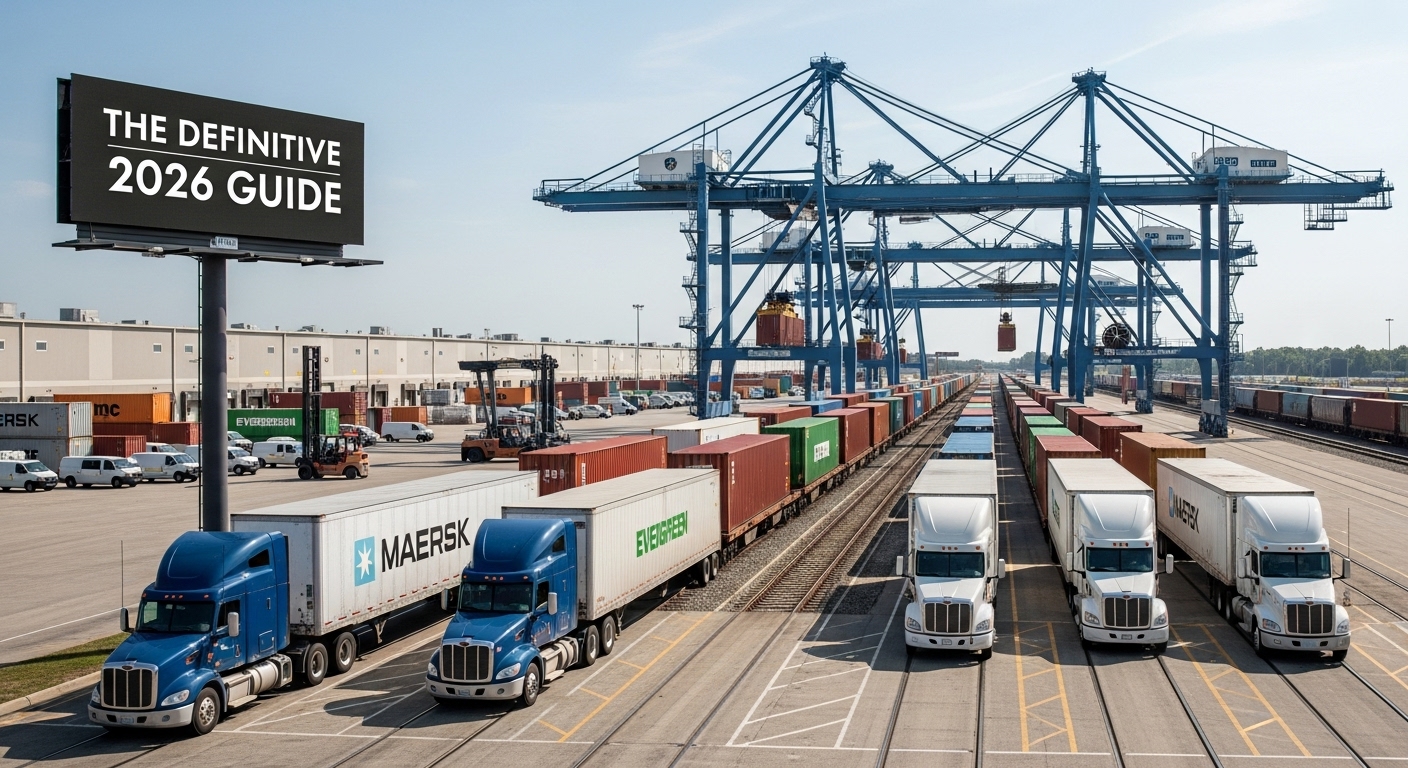
In today’s highly competitive supply chain environment, companies are under immense pressure to move goods faster, cut logistics costs, and maintain greater operational control. One critical infrastructure piece that’s emerging as a strategic advantage for large shippers and industrial players is the Private Freight Terminal (PFT) a dedicated logistics hub owned and managed by a private entity rather than a public port authority.
This guide breaks down what a private freight terminal is, how it works in the USA, the advantages and challenges, real‑world examples, costs and investment considerations, and future trends shaping this vital logistics asset.
1. What Is a Private Freight Terminal?
A private freight terminal is a cargo handling facility that a private company or consortium owns and operates to manage the movement, storage, and transfer of goods. Unlike public terminals which are open to any carrier or shipper private terminals serve specific users or contracted customers and are often tailored to the operational needs of those businesses.
At its core, a private freight terminal functions as a modal transfer and logistics hub where goods can switch between transportation modes such as truck to rail, rail to truck, or ship to rail quickly and efficiently, under the control of the terminal owner.
2. Why Private Freight Terminals Matter in the U.S. Logistics System
The United States has one of the most extensive freight networks in the world, with approximately 140,000 miles of freight rail lines forming a backbone for heavy cargo movement across the country.
Within this network, private freight terminals fulfill several strategic needs:
- Dedicated handling capacity: Avoid congestion at public terminals and ports.
- Greater operational control: Coordinate inbound and outbound freight precisely.
- Customization: Tailored equipment and processes for specific cargo types (e.g., refrigerated goods, bulk commodities).
For companies with high freight volume such as manufacturers, retailers, or commodities producers private terminals can drastically improve efficiency and reduce the logistical friction associated with public facilities that serve multiple users.
3. How Private Freight Terminals Work Step by Step
A private freight terminal integrates infrastructure, technology, and operations to facilitate freight movements efficiently. Typical components and functions include:
- Strategic location: Near major highways, rail lines, or ports.
- Inbound reception: Freight arrives by truck or rail.
- Storage and staging: Goods can be stored short‑term (yard, warehouses) before further movement.
- Modal transfer: Cargo transfers between trucks, trains, or, in some cases, ships.
- Dispatch coordination: Efficient scheduling reduces dwell time and turnaround delays.
Throughout this process, private terminals often deploy advanced logistics software yard management systems (YMS), warehouse management systems (WMS), and real‑time tracking to control movements and inventory.
4. Public vs. Private Terminals – What’s the Difference?
| Feature | Public Terminal | Private Freight Terminal |
| Ownership | Government/port authority | Private company |
| Access | Open to all licensed carriers | Restricted or dedicated |
| Usage Costs | Standard fees | Custom contracts or internal cost allocation |
| Flexibility | General purpose | Tailored to owner’s needs |
| Control | Lower | High |
| Congestion Risk | Higher | Lower |
| Typical Users | Multiple shippers | Large volume shippers and logistics partners |
| Tech Integration | Basic | Often advanced |
Private terminals generally offer greater control, speed, and predictability, while public terminals provide broad accessibility but can experience congestion and variable service levels.
5. Benefits of Private Freight Terminals
5.1 Faster Turnaround and Reduced Delays
With dedicated handling lanes, reserved slots, and tailored operations, private freight terminals significantly reduce cargo dwell time compared to busy public ports.
5.2 Cost Savings Over Time
Although the upfront investment is substantial, the reduction in third‑party fees, demurrage charges, and delays can lead to significant long‑term cost savings for high‑volume businesses.
5.3 Better Supply Chain Control
Private terminals allow businesses to coordinate logistics with predictable schedules and integrate directly with internal inventory and transportation systems.
5.4 Enhanced Security
Access control, CCTV, and dedicated surveillance reduce the risk of theft, loss, or unauthorized access.
5.5 Flexibility in Handling Goods
Facilities can be designed for specific cargo types including cold chain, bulk, hazardous materials, or oversized freight tailored to the owner’s needs.
6. Challenges and Considerations
6.1 High Capital Investment
Building or leasing land, installing rail sidings, and purchasing equipment like cranes or forklifts require significant upfront capital.
6.2 Operational Complexity
Managing a terminal involves logistics planning, staffing, technology investment, and compliance with regulatory requirements (e.g., customs for import/export cargo).
6.3 Volume Justification
For companies with lower or irregular freight volume, private terminals may not be cost‑effective compared to using public terminals or contract logistics providers.
7. Examples of Private Freight Terminals in (or Related to) the U.S. Market
While many U.S. freight terminals are technically owned by rail carriers or public port authorities, several facilities operate under private ownership or specialized public‑private contracts that mirror private terminal functions:
Brookhaven Rail Terminal New York
The Brookhaven Rail Terminal (BRT) in Long Island, New York, is a privately funded truck‑to‑rail transloading facility originally built with around $40 million in private investment handling freight such as construction materials and biofuels.
USA Rail Terminals Gulf Coast
Companies like USA Rail Terminals own and manage rail terminal facilities in Texas and Louisiana, providing storage, switching, and transloading services tailored to industrial customers across key Gulf Coast markets.
Private Warehousing and Logistics Providers
Many third‑party logistics companies and warehousing firms operate terminals that function like private freight terminals, offering dedicated freight handling and value‑added services across the U.S. These include transloading facilities, rail access hubs, and integrated logistics centers (examples found in industry listings).
8. Cost and Investment Breakdown (High‑Level)
While there are no standard “price lists” for private freight terminals (because each is custom‑built based on scale, location, and services), key cost components typically include:
| Cost Category | Range (Indicative) | Notes |
| Land Acquisition / Lease | $500,000–$5M+ | Depends on location proximity to transport hubs |
| Rail Siding Construction | $1M–$10M+ | Varies by length, grade, and rail connectivity |
| Equipment (Cranes, Forklifts, etc.) | $500,000–$3M+ | Depends on automation and capacity |
| Technology Systems (WMS/YMS) | $100,000–$1M+ | Includes software and integration costs |
| Security & Infrastructure | $250,000–$1M+ | Fencing, surveillance, access control |
Note: These are indicative ranges only actual costs depend on regional land values, permitting requirements, rail access complexity, and equipment choices.
9. Who Should Consider Building a Private Freight Terminal?
Private freight terminals are most valuable for:
- Manufacturers with high inbound/outbound volumes
- Retailers with regional distribution hubs
- E‑commerce enterprises seeking faster delivery cycles
- Commodity producers (e.g., bulk minerals, agricultural products)
- Companies seeking supply chain control and cost predictability
For smaller companies, partnering with contract logistics providers or leasing dedicated space within public terminals can mimic many benefits without heavy capital commitment.
10. Emerging Trends in Private Freight Terminal Operations
Automation and Robotics
The integration of automated guided vehicles (AGVs), robotic yard cranes, and digital tracking enhances efficiency and reduces labor costs.
Advanced Data Analytics
Real‑time analytics help optimize terminal throughput, inventory levels, and scheduling to minimize delays.
Sustainability Initiatives
Electrified handling equipment and solar power installations reduce environmental footprint and improve cost management.
Expanded Intermodal Integration
Private terminals increasingly function as central hubs linking road, rail, and sometimes short‑sea shipping for seamless cargo flows.
Conclusion
Private freight terminals represent a strategic logistics asset for companies that handle large freight volumes, require precise control over cargo movements, and seek to optimize supply chain performance. By offering dedicated infrastructure, faster throughput, enhanced security, and greater operational flexibility, these terminals help businesses navigate the complexities of modern logistics especially in the expansive freight ecosystem of the United States.
Whether you’re a supply chain executive evaluating cost‑benefit scenarios or a logistics operator planning future investments, understanding how private freight terminals operate and when they make sense is essential for staying competitive in 2026 and beyond.
