
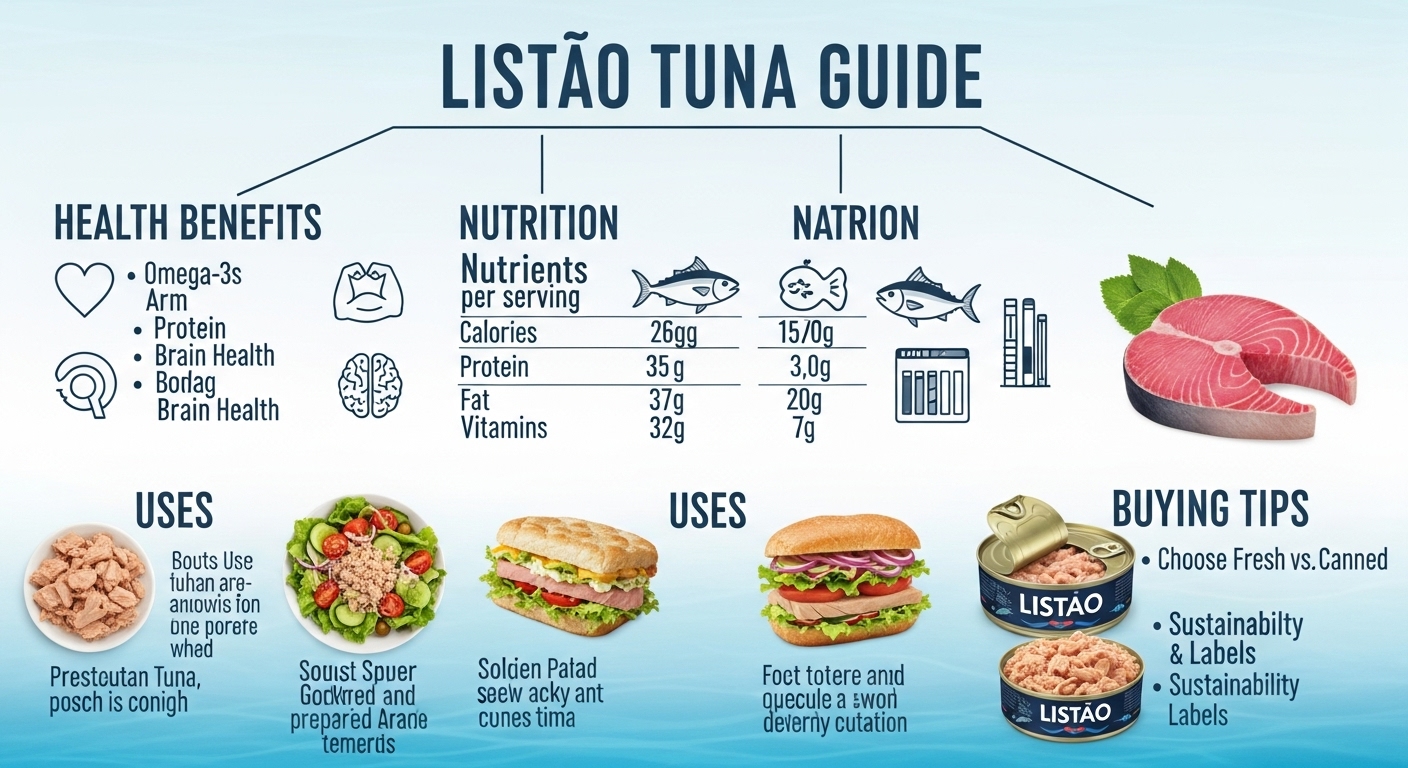
Listao tuna also known as skipjack tuna is one of the most consumed and commercially important tuna species across the globe. Found in tropical and warm waters, this fish is highly prized for its mild flavor, lean meat, and versatility in culinary uses, from sushi to canned products. In the U.S. market, Listao tuna is usually sold as canned “light tuna,” largely sourced from skipjack fisheries.
In this comprehensive guide, we’ll walk you through what Listao tuna really is, why it’s popular, its nutritional value, culinary uses, sustainability concerns, how it compares with other tuna types, and a buying guide with typical prices in the U.S.
1. What Is Listao Tuna?
“Listao tuna” refers to the skipjack tuna species (Katsuwonus pelamis) a medium‑sized pelagic tuna that swims in surface waters of oceans worldwide. It’s also known by other names such as oceanic bonito, cakalang, or victor fish in different regions.
Key Biological Facts
- Species: Katsuwonus pelamis (only member of its genus)
- Habitat: Tropical and warm‑temperate ocean waters worldwide, often near the surface.
- Size: Medium typically around 1–3 feet long.
- Commercial Importance: One of the most caught tuna species globally, representing a large share of canned tuna production.
Skipjack’s speed, abundance, and relatively rapid growth make it an ideal choice for fisheries and seafood processors.
2. Nutritional Value: A Powerhouse of Protein & Omega‑3s
Listao tuna is a nutrient‑dense seafood option worth including in a healthy diet.
Nutrient Highlights (per 100g of cooked skipjack/approximate values)
(Note: Values depend on processing fresh, canned in water, or oil)
- Protein: High excellent for muscle growth and repair.
- Omega‑3 fatty acids (EPA & DHA): Heart‑healthy fats often under‑consumed in Western diets.
- B Vitamins: Especially B12 and niacin.
- Selenium: Important antioxidant mineral.
- Vitamin D: Supports bone health and immunity.
Health Benefits
Supports cardiovascular health through omega‑3s
High‑quality protein supports muscle and metabolic function
Low in saturated fat compared to many animal proteins
May help manage cholesterol levels and inflammation
Unlike larger tuna species (e.g., albacore or bluefin), skipjack tends to accumulate less mercury, making it a safer choice for routine consumption though moderation is still recommended for pregnant women and young children.
3. Culinary Uses: Versatile and Delicious
Fresh Uses
Though less common in the U.S. fresh market than canned, skipjack is popular for:
- Sashimi and sushi in Japanese cuisine;
- Seared tuna steaks with herbs and citrus;
- Grilled tuna with Mediterranean spices.
Canned Tuna (Most Common)
Canned Listao/skipjack tuna is sold in various forms:
- In water – lighter flavor, lower calories;
- In oil – richer taste, good for Mediterranean dishes;
- Chunk or solid cuts – texture varies by product.
These products are used in:
- Tuna salads and sandwiches
- Pasta and casseroles
- Tacos, wraps, and poke bowls
Europe and Asia also use skipjack in specialized products such as katsuobushi (smoked, dried flakes) for broths and seasoning though these are less typical in U.S. grocery aisles.
4. Sustainability: What You Need to Know
Skipjack tuna (Listao) is generally considered more sustainable than larger tuna species because:
- It has a fast growth rate and abundant global stocks.
- Many skipjack fisheries are certified sustainable through organizations like the Marine Stewardship Council (MSC).
- Management systems both regionally and internationally help prevent overfishing.
Potential challenges include:
- Bycatch of other species if aggressive fishing methods (like purse seines with fish aggregating devices) are used.
- Local fishery management varies by country, affecting sustainability credentials.
Tip: When shopping, look for MSC certification or dolphin‑safe labels these are indicators of responsible sourcing.
5. How Listao Tuna Compares with Other Tuna Types
Here’s a quick comparison of common tuna species found in U.S. markets:
| Species | Common Form in Market | Flavor Profile | Mercury Level | Sustainability |
| Listao (Skipjack) | Light canned tuna | Mild | Lower | Generally Good |
| Albacore | White canned tuna | Milder, firmer | Moderate | Mixed depends on fishery |
| Yellowfin | Fresh & some canned | Richer flavor | Moderate | Varies by region |
| Bluefin | Fresh sushi grade | Rich, intense | Higher | Overfished concerns |
In the U.S., skipjack is almost always the default for “light tuna” labeling. It’s often less expensive than albacore white tuna and lower in mercury, making it popular among health‑minded consumers.
6. Listao Tuna in the U.S.: Product & Price Comparison
While products branded specifically as “Listao tuna” are rare in U.S. stores, many skipjack tuna products are widely available. Below are typical price ranges you might see in major retailers or online stores:
| Product | Form | Typical U.S. Price (Approx.) | Notes |
| Wild Planet Wild Skipjack Tuna | Canned (5 oz) | ~$4.50–$5.50 | Sustainability focus, premium brand |
| Festival Skipjack Chunk Tuna | Bulk canned | ~$5.50–$7 (66 oz) | Restaurant/chef size |
| Clover Leaf Chunk Light Tuna | Canned (170 g) | ~$2.00–$3.00 | Budget friendly |
Note: Prices vary significantly by retailer, can size, and supply chain factors.
7. Buying Tips: How to Choose Quality Listao / Skipjack Tuna
To pick the best product, consider these:
Labeling
- “Skipjack tuna” or “light tuna” usually listao.
- “Wild‑caught” often indicates better environmental practices.
Sustainability Labels
- MSC Certified
- Dolphin Safe
Packaging
- Water‑packed for lower calories;
- Oil‑packed for richer flavor.
Use Case
- For salads and light dishes, go water‑packed;
- For Mediterranean or pasta dishes, oil‑packed can deepen flavor.
FAQs
Is listao tuna healthy?
Yes high in protein and omega‑3s with lower mercury than some other tuna types.
Is it safe for kids or pregnant women?
Generally safe in moderation due to lower mercury but follow recommended guidelines for fish consumption.
Can I use it raw?
Yes, skipjack can be used raw in sushi or seared dishes at restaurants with proper food‑safety controls.
What does “light tuna” mean?
In U.S. markets, it usually refers to skipjack or similar species with lighter colored meat.
Conclusion
Listao tuna synonymous with skipjack tuna is a nutritious, versatile, and typically sustainable seafood choice that fits a wide spectrum of culinary diets and health goals. Whether you enjoy it in salads, tacos, seared steaks, or classic tuna sandwiches, understanding what listao tuna is, how it compares with other tuna types, and how to choose quality products will help you make informed choices that benefit your health and the planet.
By prioritizing sustainability labels and understanding nutritional values, you can make listao tuna a smart and delicious part of your diet.
