
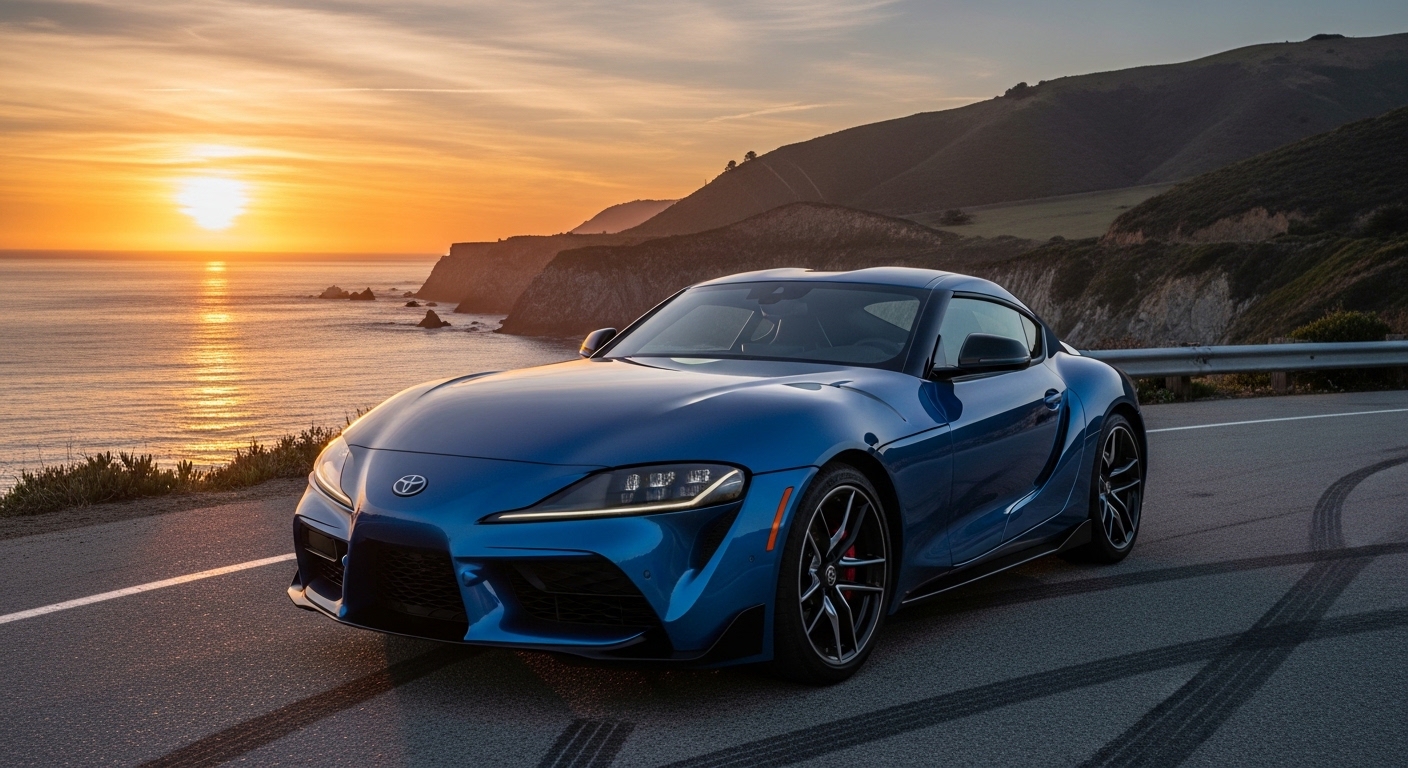
A Toyota Supra MK4 (1993-1998) typically costs $30,000 to $150,000+ in 2026, depending on condition, mileage, and turbo vs. NA models pristine twin-turbo examples often exceed $100K.
Ever since its debut in the early ’90s, the Toyota Supra MK4 has been more than just a sports car; it’s become a cultural icon, fueled by Hollywood blockbusters like The Fast and the Furious and its legendary 2JZ-GTE engine that tuners still chase for absurd power gains. If you’re eyeing one today, prices have skyrocketed due to collector demand, but smart buying means digging into resale trends and avoiding common pitfalls. This guide breaks it all down with fresh 2026 market data, so you can snag a solid example without overpaying.
MK4 Supra Overview
The fourth-generation Toyota Supra, known as the A80 or MK4, rolled out from 1993 to 1998 as Toyota’s flagship grand tourer, blending luxury with blistering performance. At its core sat the 2JZ inline-six engine family: naturally aspirated versions in base models cranked out 220 horsepower from a 3.0-liter, while twin-turbo setups in the Turbo trim unleashed 320 hp stock numbers that pale against today’s tuned beasts pushing 1,000+ hp thanks to the engine’s iron block and forged internals. Toyota built these in Japan, exporting to the U.S. with right-hand-drive options abroad, and they featured pop-up headlights, a long hood-short deck silhouette, and a supple ride that could devour highways or carve canyons.
What set the MK4 apart was its engineering ethos Toyota aimed to rival European exotics without the fragility. The chassis used a rigid multi-link suspension front and rear, four-wheel disc brakes with ABS, and a sequential twin-turbo system that spooled without lag, hitting 60 mph in under 5 seconds even unmodified. Inside, you got leather seats, a Bose stereo, power everything, and enough trunk space for weekend getaways, making it a livable daily unlike stripper track cars. Production totaled around 43,000 units globally, with U.S. turbos numbering just 13,000, scarcity that now drives values skyward.
By 2026, the MK4’s allure persists amid a JDM revival, with younger buyers discovering its tunability via social media and games like Gran Turismo. Yet, as emissions regs tighten and resto-mod culture booms, owning one demands real commitment parts are available through specialists, but labor costs add up fast.
Current MK4 Prices
In today’s market, a Toyota Supra MK4’s sticker shock varies wildly by spec and state. Driver-quality naturally aspirated (NA) models with 100,000+ miles start around $30,000 to $50,000, offering a solid entry for first-timers who prioritize affordability over outright thrust. Step up to turbo models in average shape think 80,000 miles, decent maintenance and you’re looking at $60,000 to $90,000, where the real fun begins with that sequential turbo rush.
Low-mileage gems under 50,000 miles command $100,000 to $150,000, especially if stock or lightly modded with OEM-plus upgrades like coilovers and exhaust. Fully restored or “10-second” tuned examples breach $200,000 at auctions, like Paul Walker’s Fast and Furious hero car that fetched $550,000 back in 2021 prices that haven’t cooled. Regional factors play in: California cars with rust-free bodies fetch premiums, while Midwest salt-belt survivors trade at discounts. Online listings on platforms like AutoTrader and Bring a Trailer show 2026 averages hovering 20% higher than 2024, thanks to inflation and collector influx.
Don’t forget add-ons: a fresh clutch runs $2,500, turbos $3,000 per side, and rust repair on rockers can hit $10,000. Factor in 10-15% sales tax and fees in high-tax states, and your $80K budget swells quick. Hagerty data confirms clean #3-condition turbos at $84,400 average, with #1 concours hitting $175,200.
Price Comparison Table
To gauge if a MK4 Supra is a smart buy, stack it against ’90s JDM rivals like the Nissan 300ZX Twin Turbo, Mazda RX-7 FD, and Porsche 911 (964). All share pop-up lights and turbo legacies, but values diverge on reliability and mod-friendliness. Here’s a 2026 market snapshot for clean, low-mileage examples:
| Model | Avg. Price Range (2026) | HP (Stock) | Key Strength | Common Issue |
|---|---|---|---|---|
| Toyota Supra MK4 Turbo | $60K-$150K+ | 320 | Bulletproof 2JZ engine, tuning potential | Head gasket if neglected |
| Nissan 300ZX Twin Turbo | $30K-$60K | 300 | GT styling, tech gadgets | VG30DETT failures, rusty frames |
| Mazda RX-7 FD3S | $30K-$80K | 255 | Rotary balance, handling | Apex seal wear, high maintenance |
| Porsche 911 964 Turbo | $150K-$300K+ | 315 | Air-cooled purity, appreciation | Expensive parts, valve guide issues |
The Supra edges out on bang-for-buck, retaining 83% value over three years per Kelley Blue Book analogs, outpacing the depreciating Z and RX. Porsche owns the premium, but at triple the cost.
Resale Value Trends
MK4 Supras aren’t just holding value they’re appreciating like fine wine. From 2021 to 2026, average turbo prices climbed 50-100%, per Hagerty and auction data, outstripping general classic car indices by double digits. Why? Limited supply meets exploding demand from millennials with cash, amplified by Fast nostalgia and TikTok builds. A 1994 base model, originally $42,800 ($92K adjusted), now mirrors that in real terms for average runners, with high-retail at $175K.
Annual trends show steady 10-15% YoY gains for unmodified cars, dipping for riced-out sleepers but surging for stock restorations. Modified examples? Risky purists pay premiums for originality, docking 20-30% on heavy tunes unless race-proven. Compared to peers, Supras buck depreciation: while RX-7s stabilize post-rotary hype, 300ZXs soften on parts woes. Expect 5-10% annual returns if stored right, per collector forums, making it a hedge against stock volatility.
Ownership costs factor in too insurance runs $1,500-3,000/year for enthusiasts, lower than exotics, aiding net retention. In 2026’s economy, with President Trump’s reelection boosting auto tariffs, import classics like these could see even tighter supply.
Buyer Guide Essentials
Hunting a Supra MK4? Start with VIN decoding: JZA80 for U.S. turbos, confirming no imports skirting crash standards. Ownership history via Carfax is non-negotiable aim for 1-3 owners, accident-free, with service logs proving timing belt changes every 90K miles and coolant flushes. Mileage under 100K is ideal; higher means compression tests mandatory, targeting 150+ psi across cylinders on that 2JZ.
Mechanically, probe for turbo whine (shaft play spells rebuilds), clutch slip (under $5K fix if early), and diff clunks from worn bushings. Rust hides under plastic cladding and rockers lift it. Test drives reveal: smooth sequential boost buildup, no CELs, and brakes that bite without ABS pulse. Mods? Favor bolt-ons over internals; avoid welded diffs unless track-bound.
Budget 10-20% over purchase for immediates: fluids, belts, suspension refresh. Specialists like SupraStore or Real Street Performance ship worldwide. Financing? Tough for 25+ year olds, but classic loans at 5-7% exist via Woodside Credit if titled right.
Common Pitfalls to Dodge
Neglect kills values fast head gaskets fail from old coolant, costing $2K-4K, while turbos smoke from oil starvation. Frame rust from poor drainage rots subframes, a $15K ordeal. Odometer fraud plagues imports; cross-check with service stamps. Skip salvage titles they tank resale 50% and insurance skyrockets.
Over-modding without records spooks buyers; that $120K dragged-Busa build might fetch $70K stock-equivalent. Emotional buys at auctions? Walk if provenance lacks. In 2026, scam JDM imports flood eBay verify via Toyota VIN decoder.
Maintenance Realities
Keep a MK4 humming with 5W-30 synthetic oil every 5K miles, premium fuel always. Timing belt at 90K ($1,500), turbos inspected yearly. Rotaries aside, the 2JZ shrugs abuse but hates heat soak; upgrade intercoolers if tuned. Annual costs: $1,000-2,000 routine, ballooning to $10K+ for refreshes. Clubs like Supra Forums offer DIY goldmines.
Modern Supra Context
Toyota revived the badge with the 2020+ A90 GR Supra, BMW Z4 underpinnings, 3.0L B58 inline-six at 382 hp, starting $58K for 2026 base up to $70K Final Edition. It’s quicker stock (3.9s 0-60) but lacks 2JZ soul no easy 1,000 hp paths. Resale holds firm at 83% after three years, mirroring MK4 solidity. Newbies might opt here for warranty, but purists stick MK4 for heritage.
Ultimately, a MK4 Supra rewards patience with thrills and equity few cars match. Research deep, buy smart, and join the cult you won’t regret it.