
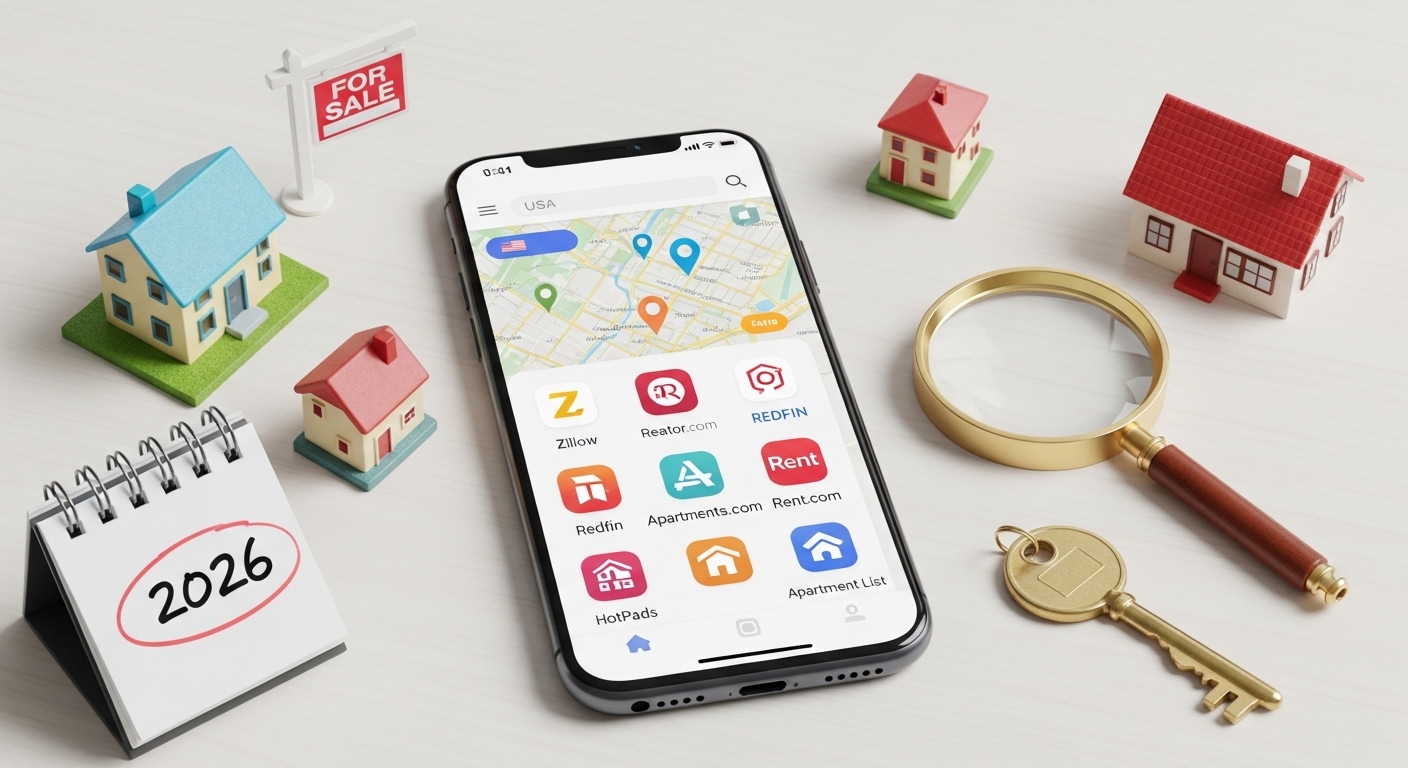
The best apps to find homes, rentals, and apartments in the USA include Zillow, Realtor.com, Redfin, Apartments.com, HotPads, Rent.com, and Apartment List each offering robust search tools, real‑time listings, and filters to help buyers and renters find the ideal property.
Finding a place to call home whether it’s buying your first house, renting an apartment near work, or scouting neighborhoods with better schools can be one of the most stressful decisions someone makes. In the United States today, mobile apps have become indispensable tools in this process, making it easier to browse listings, compare neighborhoods, and connect with landlords and agents all from your phone. But with so many real estate apps on the market, it’s not always obvious which ones are worth your time and which ones deliver on accuracy, speed, and insight.
This deep‑dive guide examines the most effective and widely trusted apps for finding homes, apartments, and rentals across the USA in 2026. Drawing on search engine results, industry insights, and user trends, we’ll explore what makes each platform unique, how they compare, and how to choose the right one depending on your goals whether buying, renting, or even exploring off‑market opportunities.
Why Mobile Apps Matter More Than Ever in Real Estate Search
Today’s home hunters are increasingly mobile first. Search behavior on Google and app stores shows that apps like Zillow, Realtor.com, and Redfin dominate the real estate category not just because they have millions of listings, but because they combine real‑time data, intuitive filters, map‑based browsing, and alerts that keep users ahead of the market.
The era of clipping newspaper ads or driving through neighborhoods with printed flyers is long gone; now, buyers and renters expect:
- Instant notifications when a new listing hits the market.
- Filters that reflect real needs, like pet‑friendly units, commute time, or school zones.
- Interactive map searches with neighborhood overlays.
- Integrated tools for saving favorites, contacting landlords or agents, and comparing prices across similar listings.
Apps have emerged as the “front door” to the housing market, helping users save time and make smarter decisions by blending data, usability, and speed.
Top Real Estate Search Apps in the USA for 2026
Below is an in‑depth look at the leading apps that help users find homes, apartments, and rentals nationwide complete with insights into their standout features, ideal users, and what sets them apart in a crowded marketplace.
1. Zillow – All‑Around Real Estate & Rentals Search
One of the most recognized names in U.S. real estate, Zillow Rentals remains a dominant app for both buyers and renters. Zillow stands out for its vast inventory, intuitive filtering, and additional tools like mortgage calculators and market trend views.
Zillow’s strength lies in its comprehensive approach: it aggregates listings from MLS databases, For Sale By Owner (FSBO) postings, and local rentals, giving users access to a broad spectrum of homes and apartments. The app lets you search by city, ZIP code, or even draw custom areas on the map to focus your search on specific neighborhoods. You can filter results based on price, number of bedrooms, amenities like in‑unit laundry or parking, and even commute preferences.
Renters benefit from features like Renter Profile, which allows you to share details with landlords to speed up applications, and Rent Zestimate®, Zillow’s rent estimate tool that helps gauge fair market value before you apply. For buyers, Zillow also offers listings for homes for sale and tools to connect with local real estate professionals.
2. Realtor.com – MLS‑Powered Listings & Detailed Search Tools
Realtor.com Real Estate & Rent is another top contender, particularly valued for its direct links to MLS (Multiple Listing Service) data, which ensures listings are among the most current and accurate available.
Realtor mobile app offers a suite of filters price range, lot size, school boundaries, flood risk layers, and noise levels that help refine your search beyond basic criteria. It also provides interactive maps with points of interest, so renters and buyers can evaluate proximity to restaurants, shops, parks, and transit options. High‑resolution photo galleries and even 3D tours are increasingly common, making virtual exploration of properties more informative.
For buyers considering neighborhoods they are less familiar with, these detailed layers add context that goes beyond mere listings and can influence decisions about where to live in a major way.
3. Redfin – Search, Browse, and Engage With Agents
Redfin’s app is a blend of real estate search and brokerage tools, making it a hybrid experience for buyers and renters alike. According to Google Play rankings, Redfin consistently ranks near the top in user installs and ratings among house and home apps in the U.S., alongside Zillow and Realtor.com.
What distinguishes Redfin is the integration of live agent services directly within the app. Users can browse listings, save favorites, receive alerts about price changes, and even schedule tours or video walkthroughs with local Redfin agents. For renters, the platform provides detailed filters and availability information, while buyers benefit from Redfin’s ability to seamlessly connect search with actual transaction support.
The Redfin app is particularly appealing to those who want a smooth hand‑off from discovery to transaction, without needing to leave the app to contact an agent or access deeper service features.
4. Apartments.com – Focused Rental Marketplace
Rental hunting gets specialized with Apartments.com, a dedicated platform that focuses deeply on rental homes, condos, and apartments. Reviews and rental guides emphasize its massive database over a million listings combined with rich amenities data.
Apartments.com excels at helping renters visualize spaces and compare options. The app offers detailed property information, virtual tours, contact forms to connect directly with property managers, and filters for fees, utilities included, and pet policies. For renters who place a high priority on detailed specifications and availability, Apartments.com’s focused U.S. rental inventory and search sophistication often outpace generalist marketplaces.
The platform’s strength is particularly notable if you’re moving to a new city or metro area and need extensive rental options with reliable amenities data and up‑to‑date availability information.
5. Rent.com – Nationwide Rental Listings With Map Search
Rent has been around since 1999, and today it continues to be a go‑to rental marketplace under the umbrella of Redfin.
Rent.com’s mobile app emphasizes map‑based browsing and search simplicity. Whether you’re searching for a studio apartment or single‑family home for rent, you can quickly filter by price, bedroom count, and preferred neighborhoods. Its longstanding presence in the rental market also means users benefit from a broad pool of listings in both urban and suburban areas.
Rent.com’s straightforward and user‑friendly interface makes it a smart choice for renters who value clean navigation and essential data without overwhelming options or overly complex menus.
6. HotPads – Map‑Driven Rental Discovery
Owned by Zillow, HotPads sets itself apart with a visual, map‑first interface that appeals to renters who want a spatial sense of listings.
HotPads displays properties directly on an interactive map with color‑coded building icons and neighborhood highlights. This design makes it easy to explore different areas at a glance and understand how rental options are spread geographically. Because it also integrates with Zillow’s wider platform, HotPads offers access to a large inventory of homes, apartments, and condos, complemented by intuitive location browsing.
For renters who are tightly focused on where they live proximity to transit, campus, or neighborhood features HotPads’ map experience can provide a higher‑resolution understanding than many list‑only interfaces.
7. Apartment List – Personalized Matching for Renters
While not always as large in volume as Zillow or Apartments, Apartment List is frequently recommended by users and renters for its personalized approach to matching renters with apartments.
Rather than just listing units, Apartment List allows renters to set preferences and then surfaces options that match lifestyle priorities and budget. This matchmaking style, similar to dating apps, helps renters discover options that they might not encounter in standard search filters. The app is particularly well‑liked for its user‑centric experience and clean interface ideal if you prefer a less overwhelming search process.
Comparison Table: Best Real Estate Search Apps (2026)
| App | Best For | Key Features | Strength |
| Zillow | Homes & Rentals | Extensive listings, filters, rent/value estimates | All‑in‑one search |
| Realtor.com | Accurate MLS listings | Up‑to‑date homes & rentals, detailed maps | Professional‑level data |
| Redfin | Integrated search + agents | Live agent inside app, saved alerts | Seamless search‑to‑transaction |
| Apartments.com | Rentals only | Large rental inventory, amenities filters | Apartment rental expertise |
| Rent.com | Easy rental search | Map browsing, broad listings | Simple UI |
| HotPads | Map‑driven search | Visual map interface, color codes | Geographic exploration |
| Apartment List | Personalized matching | Preference‑based matches | Tailored recommendations |
How to Choose the Right App for Your Search
The “best” real estate app often depends on your specific needs and stage of the housing search:
- If you want the broadest set of listings across homes and rentals, Zillow and Realtor.com are top contenders.
- For renters focused on detailed search and availability, Apartments.com and Rent.com deliver focused tools that simplify decision‑making.
- If geographic context matters most, HotPads or map‑centric tools help visualize options relative to transit, work, or amenities.
- For those who want personalized matches and suggestions, Apartment List’s algorithmic approach can surface options that raw filters might miss.
Tips to Maximize Your Home‑Search App Experience
- Set alerts on multiple apps: Don’t rely on just one platform many users find listings early on Zillow or Realtor.com before they hit other marketplaces.
- Use map filters: Map search features provide context about neighborhoods and help visualize commute distances.
- Save favorites often: Even if you’re only “window‑shopping,” saving favorites and preference settings helps apps tailor results and alerts.
- Be cautious on open marketplaces: Platforms like Craigslist can still have listings but carry risk of scams always verify in person.
The Future of Real Estate Search
As AI advances, home search apps are integrating smarter tools that help users refine searches using natural language and AI recommendations. For example, new experimental platforms are emerging that allow conversational search such as typing “find a 3‑bed home near parks under $3,000/month” and receiving tailored results. These developments hint at a future where property discovery becomes even more intuitive and responsive to personal needs.
Conclusion
Choosing the right app to find homes, rentals, or apartments in the USA can dramatically shape your housing search experience. From broad marketplaces like Zillow and Realtor.com to rental specialists like Apartments.com and Rent.com, each platform brings unique strengths. Leveraging multiple apps will give you the widest visibility and help you balance accuracy, detail, and personalized matches.
Whether you’re searching for your first studio, upgrading to a family home, or exploring new cities, mobile apps have become essential tools that empower better decisions and faster outcomes in the dynamic U.S. real estate market.