
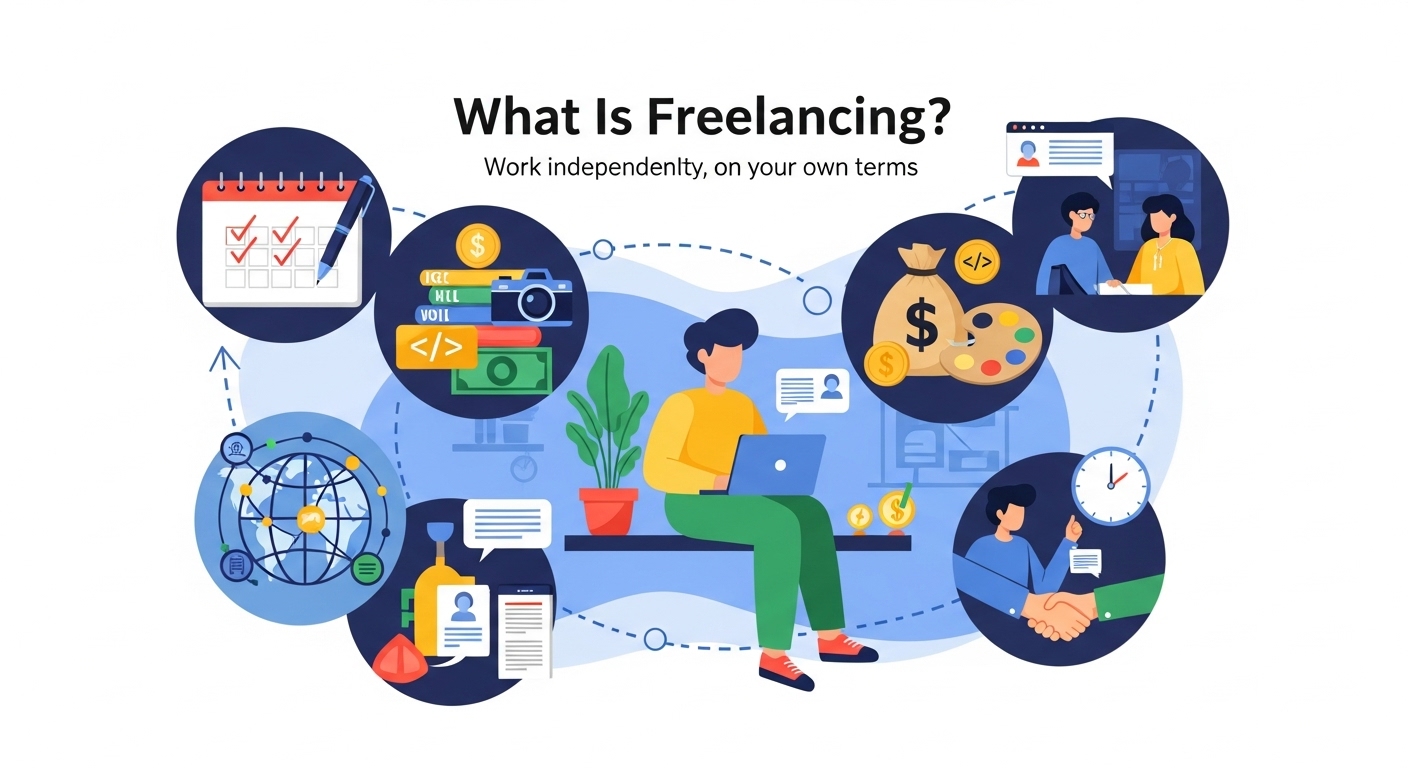
Freelancing is a form of independent work where a person offers a skill or service to different clients without committing to one employer on a permanent contract. In this type of work arrangement the freelancer controls how they work, who they work with, and how much they charge. This flexible model has existed for centuries in different forms yet it has become highly visible in the modern digital economy due to internet platforms, remote work, and global talent marketplaces.
Understanding freelancing is more than learning a definition. Freelancing represents a shift in how people earn, how companies hire, and how careers evolve. In the past most people believed a secure job meant joining a single employer and staying there until retirement. Today millions of individuals choose independence over traditional employment because they want control over time, income, and lifestyle. This transformation influences economics, education, and workforce development across the world.
The Origins And Evolution Of Freelancing
The practice of individuals working for multiple clients existed long before the internet. Historically artisans, craftsmen, scribes, architects, musicians, and writers often served patrons on a project basis. During the industrial era factory employment dominated society, which temporarily reduced the visibility of independent work. Freelancing re emerged strongly in fields such as journalism, photography, legal consulting, accounting, graphic design, and advertising during the twentieth century.
The digital era changed everything. Widespread broadband access, personal computers, and software tools created new opportunities for creative and technical service providers. The creation of online freelance platforms allowed clients to search for talent globally while freelancers could pitch for work across borders. Remote collaboration tools enabled people to manage projects, communicate, and deliver work without physical proximity. Over time this ecosystem expanded into programming, digital marketing, data science, content writing, virtual assistance, video editing, engineering design, and dozens of new service categories. Today freelancing is no longer niche. It forms a significant part of the global workforce and continues to grow.
How Freelancing Works
Freelancing operates through a simple mechanism. A client has a task or ongoing requirement and needs someone with skill to complete it. A freelancer has a specific expertise and is willing to undertake the work in exchange for payment. Both parties negotiate scope, timeline, and compensation. Once terms are agreed the freelancer completes the task and gets paid. The relationship may be short term or long term depending on the nature of the work and satisfaction of both sides.
Freelancers can source work in several ways. Some use personal referrals, others build online brands, and many rely on platforms that connect talent and clients. Platforms can handle billing, contracts, dispute resolution, and communication which makes freelancing accessible even for beginners. Offline work also continues through networking events, agencies, and local business partnerships.
Who Becomes A Freelancer And Why
There is no single profile of a freelancer. Students may freelance to gain experience. Full time employees may freelance to earn extra income. Parents may freelance for flexible schedules. Career professionals may freelance to escape office politics or corporate structures. Retired workers may freelance to stay active and share expertise. Entrepreneurs may freelance while developing their own business ideas.
Motivations differ significantly. Some want financial independence. Others want to avoid commutes. Many desire creative expression or location freedom. A common theme is autonomy. Freelancing allows people to decide what projects to accept, how many hours to work, and where to work from. Freelancers design careers that better reflect personal values.
Skills Needed To Succeed
Freelancing requires a combination of technical expertise and soft skills. Technical ability depends on the field. A designer must know design software. A developer must understand programming. A writer must master language. Beyond expertise a freelancer must communicate clearly, manage time effectively, negotiate pricing, handle feedback, market their services, and maintain discipline without supervision.
Financial literacy helps as well. Freelancers manage their own income, expenses, taxes, and savings. They need to track invoices, understand billing cycles, and prepare for irregular earnings. Organization tools, project management techniques, and scheduling systems contribute to consistency.
Real Life Example
Consider a graphic designer named Amal who worked for a local advertising company. After a few years she realized she enjoyed designing but disliked office routines and fixed working hours. She also noticed that many small businesses in her city needed branding and marketing material but could not afford full time designers. Amal decided to freelance by creating a portfolio website and joining global freelance platforms. Within months she secured clients from three different countries who valued her style. Instead of a single employer she now served multiple businesses and earned more money while working from home. Her workdays changed from rigid schedules to flexible blocks where she chose her own pace. Over time she refined her services, increased her pricing, and built long term relationships with recurring clients. Her experience illustrates how freelancing can reshape career paths and income potential.
Industries And Job Types
Freelancing spans nearly every industry. Technical fields include software development, cybersecurity, cloud engineering, data analytics, machine learning, and quality assurance. Creative fields include graphic design, video editing, animation, copywriting, illustration, and music production. Business service fields include finance, bookkeeping, virtual assistance, project coordination, translation, customer support, social media management, and market research. Even specialized professions like legal consulting, education, medical transcription, and engineering drafting operate independently. As digital transformation accelerates more job categories enter the freelance ecosystem.
Platforms And Marketplaces
Several platforms support freelance work. Some act as marketplaces where clients post jobs and freelancers apply. Others behave like talent agencies where platforms vet and match skilled professionals to clients. Payment protection systems increase trust between both sides. Reviews and ratings build credibility and reduce risk. Messaging tools streamline communication while work tracking features monitor progress.
Marketplaces vary by industry. For example creative freelancers often use portfolio based platforms while programmers may choose technical oriented ones. Writers and marketers use content focused platforms. Corporate teams may hire through managed networks that supply vetted professionals for specialized tasks.
Income Potential And Earning Models
Freelancing income varies widely. Beginners may start with modest rates while experienced specialists command premium pricing. Earnings depend on skill rarity, demand level, quality of output, speed, networking ability, and reputation. A freelancer can earn per hour, per project, per milestone, or through retainer agreements where a client pays monthly for ongoing work. Some freelancers bundle services into packages to make buying decisions easier for clients.
Income diversity is a major advantage. Instead of relying on one employer freelancers diversify across multiple clients. This reduces dependency risk and increases financial resilience. High performers sometimes expand into consultancy, agency building, digital products, training, or passive income streams related to their skill.
Benefits For Workers
Freelancing offers several benefits. The first is flexibility. Freelancers choose working hours and environments. Second is control. They decide the type of work they perform and which clients to accept. Third is income potential. High demand skills can generate substantial earnings without corporate limits. Fourth is personal growth. Freelancers learn to manage client relationships, marketing, discipline, and business strategy. Fifth is geographic freedom. Many freelancers work remotely and travel while earning.
Benefits For Companies
Businesses gain advantages from hiring freelancers. They access specialized talent without long term employment costs. Small firms can hire experts for short term projects they cannot afford full time. Large firms can scale teams quickly during busy periods. Freelancers deliver agility because they can be onboarded fast and managed through clear deliverables. Global hiring enables companies to source talent from different time zones and cultural backgrounds which enriches creativity and problem solving.
Challenges And Drawbacks
Freelancing is not ideal for everyone. Income may fluctuate from month to month. Some freelancers struggle with finding clients regularly. Without employer benefits they must manage health insurance, retirement plans, and taxes themselves. Deadlines and client expectations can be demanding. Isolation affects freelancers who miss social interaction. Self discipline is essential and not everyone enjoys managing their own workload.
Dealing with rejection, revision requests, or late payments can be emotionally challenging. Freelancers learn through experience how to set clear contracts, define scope, request deposits, and maintain professionalism. Over time these strategies reduce stress and improve income stability.
Tax And Legal Considerations
Freelancers operate as independent businesses. They must understand local tax laws, business licenses, record keeping, and contractual obligations. In some countries freelancers must register sole proprietorships, obtain tax identification numbers, or file quarterly returns. Contracts help resolve disputes and establish ownership rights especially for creative and software work. Intellectual property rules clarify copyright and usage licenses.
Portfolios And Personal Branding
A strong portfolio demonstrates competence. Clients want evidence of ability before hiring. Freelancers showcase samples, case studies, testimonials, and previous results. Personal branding differentiates freelancers in crowded markets. Branding includes specialization, messaging, visual identity, communication style, and perceived expertise. Social media accounts, blogs, newsletters, and online profiles amplify visibility and attract inbound clients.
Pricing And Negotiation
Freelancers must learn to price fairly and sustainably. Rates should reflect skill level, project complexity, time investment, and value delivered to clients. Negotiation is common. Clients may ask for discounts, faster timelines, or additional features. Professionals handle these conversations respectfully while protecting boundaries and profitability. Clear proposals and written agreements reduce misunderstandings.
Client Relationship Management
Successful freelancers treat clients as collaborators. Good communication, transparency, and responsiveness create trust. Understanding client goals and pain points leads to better problem solving. Freelancers who deliver consistent results often receive referrals and repeat projects which reduce time spent searching for new work. Relationship building becomes a business skill.
Productivity And Time Management
Without managers or fixed schedules freelancers must develop personal productivity systems. This includes setting priorities, creating task lists, minimizing distractions, tracking time, and balancing multiple projects. Burnout is a risk when boundaries are unclear. Healthy freelancers rest, delegate, automate tasks, and create work life separation.
Ethical And Professional Considerations
Freelancing demands ethics. Intellectual honesty, confidentiality, non disclosure, and respect for client data are essential. Ethical freelancers avoid plagiarism, deliver original work, refrain from misleading claims, and honor deadlines. Professionalism strengthens reputation and increases long term career sustainability.
Future Of Freelancing Worldwide
Global economic shifts indicate freelancing will continue to rise. Remote work demonstrated that physical offices are not always required. Digital tools automate administrative tasks and enable cross border collaboration. Artificial intelligence enhances productivity but also increases demand for creative, strategic, and human centered roles. Governments explore regulations and classification systems to protect independent workers. Educational institutions introduce courses on entrepreneurship and self employment. Younger generations value freedom and meaningful work experiences which align with freelance culture.
Actionable Guidance For Beginners
Individuals curious about freelancing should begin by identifying marketable skills. These may include writing, coding, teaching, design, communication, or specialized industry knowledge. Next they should study pricing, portfolio creation, and client outreach. Platforms offer low barrier entry options for beginners. Over time freelancers must refine their niche, improve skills, and deliver consistent value.
Learning Roadmap And Resources
Freelancers benefit from continuous learning. Courses, mentorships, industry blogs, conferences, and books provide insights. Networking communities and online forums offer peer support. Tracking trends helps freelancers adapt to new tools and market demands.
Final Educational Summary
Freelancing is an independent work model where individuals provide skills and services to multiple clients without permanent employment. It blends autonomy, responsibility, and entrepreneurship. It allows people to control time, income, and career direction. Companies gain access to specialized talent and cost efficiency. Challenges exist but can be managed through strategy and learning. Freelancing represents both a modern career path and a reflection of broader societal changes in how work is defined.