
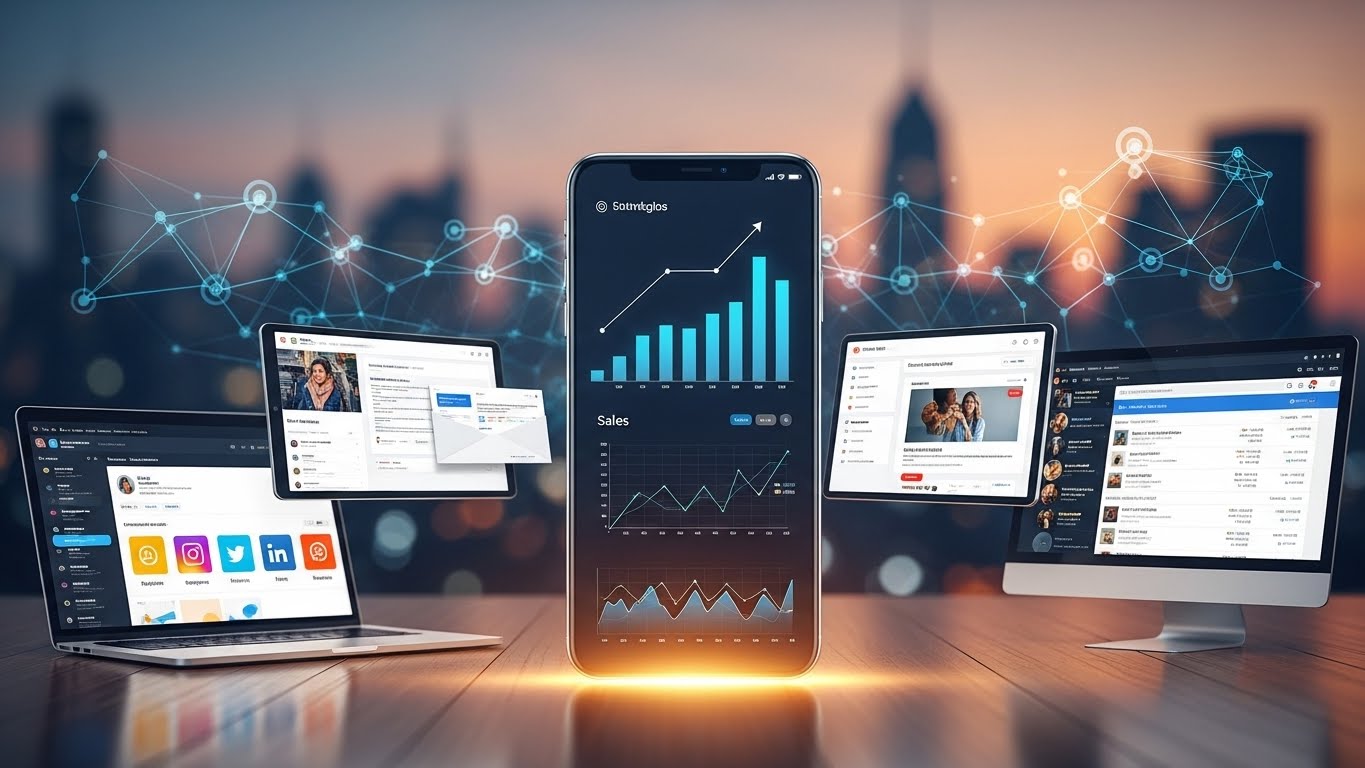
Digital marketing has evolved from a niche strategy into a global business engine. Nearly every modern company, solo consultant, and personal brand relies on it. From small coffee shops running geo targeted ads to multibillion dollar corporations orchestrating multi channel funnels, digital marketing has become essential to how products are launched, brands are shaped, and customers are won.
This guide gives a comprehensive understanding of digital marketing. It explains how it works, why it matters, the channels involved, and how businesses use it for growth. It blends lessons for beginners, frameworks for professionals, and strategic perspectives for business owners who want to outcompete rivals in a digital world.
What Digital Marketing Actually Means (And Why It Is Often Misunderstood)
At its simplest, digital marketing refers to promoting products, services, or ideas using the internet and electronic devices. Yet that definition undersells its complexity. It is not just running ads or posting on social media. It is about influencing attention, controlling distribution, shaping perception, and driving action through online channels.
A digital marketing strategy is made of multiple components that work both independently and together. Search engines, social platforms, content, email, data, analytics, automation, customer experience, and conversion optimization all play roles. When companies treat digital marketing as just a set of tactics, results are mediocre. When they treat it as an ecosystem, results compound.
One reason digital marketing is misunderstood is that platforms and behaviors change fast. Facebook’s organic reach used to be massive, now it favors paid distribution. Search algorithms reward deeper content and real expertise. Short form video shifted consumer learning. Voice search and AI assistants changed how people ask questions. The landscape has constant motion.
The Core Outcome: Attention, Trust, and Conversion
Regardless of platform, niche, or business model, digital marketing aims to win three things:
-
Attention
-
Trust
-
Conversion
Attention means being seen. Trust means credibility. Conversion means action. Every digital channel influences one or more of these.
Example:
A SaaS startup might publish comparison articles like “Top Project Management Tools for Remote Teams” to win attention from buyers searching for options. The guide builds trust through expert level breakdowns, then retargeting ads bring those readers back for a trial signup, which drives conversion. Applied correctly, digital marketing becomes a funnel that channels interest into measurable outcomes.
The Major Channels of Digital Marketing
Digital marketing involves multiple channels. Each has strengths and weaknesses, and each suits different buyer journeys.
1. Search Engine Optimization (SEO)
SEO increases visibility on search engines like Google. It brings users with informational, commercial, navigational, or transactional intent. SEO is powerful because it captures demand. People are actively looking for answers, products, or solutions.
Effective SEO today prioritizes:
• Helpful deep content
• Real expertise and credibility
• Experience-backed insights
• Updated information
• Technical site performance
• Matching search intent
• Natural link attraction
• Topical authority
Businesses that treat SEO as long term infrastructure usually outperform those chasing trends or shortcuts.
Real world anecdote:
A boutique travel agency began publishing guides for luxury destination itineraries. Within twelve months, SEO brought in fifty percent of their clients. Instead of cold outreach, clients were chasing them.
Explore: Top 11 Best SEO Tools
2. Content Marketing
Content is the backbone of digital marketing. It educates, attracts, persuades, and nurtures. Content includes blogs, guides, newsletters, reports, videos, webinars, and more.
High performing content is not surface level. It conveys real experience. A business owner describing how they increased supply chain speed by using a new platform is more memorable than generic bullet points.
Professionals use content to build authority. Service providers use it to demonstrate logic and competence. Beginners use it to enter niches. Audiences use it to learn.
3. Social Media Marketing
Social platforms influence culture, trends, and narratives. They also shape brand perception. Instagram and TikTok build visual and emotional resonance. LinkedIn drives thought leadership and B2B credibility. Facebook groups fuel communities. X supports conversation and discovery.
Organic social reach has become volatile, but paid social remains strong for targeting and experimentation.
Short form video has become a persuasive medium because it delivers quick information with personality. Many educators are teaching complex subjects through sixty second explainers that outperform long form blogs in engagement.
4. Email Marketing
Email is often the highest return digital channel. Unlike social platforms, email lists are owned audiences. No algorithm controls visibility.
Email works for nurturing, announcements, onboarding, education, upsells, and retention. Professionals rely on email to deliver depth and context. Business owners love it for predictable sales cycles.
5. Paid Advertising
Paid ads are a fast way to test offers, target specific buyers, and scale winners. Google Ads captures demand from search queries while Facebook and Instagram Ads create demand through creative storytelling and audience targeting.
Paid ads reward fast iteration and data driven decision making. The best advertisers are not creative geniuses. They are scientific experimenters.
6. Influencer and Creator Marketing
Creators shifted how brands reach audiences. People trust individuals more than logos. A tech founder breaking down product features on LinkedIn often generates more resonance than polished corporate messaging.
Influencers function as modern distribution channels. Businesses that integrate creator partnerships often reduce acquisition costs.
7. Conversion Rate Optimization (CRO)
It is not enough to attract traffic. Conversion optimization focuses on improving landing pages, funnels, offers, and user experience so more visitors convert. Even small improvements compound revenue.
The Business View: Digital Marketing as a Profit Engine
For business owners, digital marketing is not purely promotion. It is a profit engine.
Key business outcomes include:
• Customer acquisition
• Lifetime value expansion
• Demand creation
• Lead generation
• Brand building
• Competitive advantage
• Market positioning
The best companies design marketing that aligns with their economic model.
For example, subscription businesses rely on retention. Ecommerce businesses prioritize repeat purchasing and abandoned cart recovery. High ticket service providers focus on credibility and trust.
The Learner View: Digital Marketing as a Skillstack
For learners, digital marketing represents an expanding career path. A beginner can start with one skill such as copywriting or SEO, then build a stack over time. The digital marketing industry rewards versatility. A copywriter who understands landing pages is more valuable than one who writes in isolation.
Job roles include:
• SEO specialist
• Email marketer
• Ads manager
• Content strategist
• Social media manager
• Marketing analyst
• Growth marketer
Professionals often evolve into broader growth roles as they understand data, experimentation, and ROI.
The Professional View: Digital Marketing as a System
Professionals think in systems. They integrate acquisition, retention, and monetization. They track KPIs, measure funnels, analyze cohorts, and refine messaging.
Advanced operators use attribution models, multi touch funnels, retargeting sequences, and offer stacking. They understand that conversions rarely happen on the first touch. Customers often need to encounter brands multiple times across multiple platforms.
Digital Marketing and Psychology
Digital marketing is as much psychology as technology. Human decision making rarely occurs in straight lines. People compare alternatives, search for validation, and look for social proof. They want to reduce risk before taking action.
A simple example illustrates this: imagine shopping for a new phone. You might watch reviews on YouTube, read comparison blogs, ask friends, visit a store to feel the device, then finally order online. That journey passed through multiple channels and trust points.
Digital marketing aligns with how humans naturally evaluate choices.
The Funnel Framework Explained
Funnels describe the journey from awareness to purchase. Typical funnel stages include:
-
Awareness
-
Interest
-
Consideration
-
Decision
-
Action
-
Retention
Digital marketing activities map to each stage:
SEO and social drive awareness. Content and email foster consideration. Reviews, demos, guarantees, and offers drive decisions. Customer support and onboarding drive retention.
Funnels are dynamic. A B2C buyer might complete this journey within a day. A B2B enterprise buyer could take months.
How Digital Marketing Builds Trust
Trust is the currency of online business. Without trust there is no sale.
Trust signals include:
• Expertise based content
• Testimonials and case studies
• Demonstrated results
• Transparent communication
• Guarantees and policies
• Certifications and awards
• Founder storytelling
• Customer experience
A freelance consultant who writes reflective case studies of client work often builds more credibility than one who only shares promotional posts.
Digital Marketing for Business Growth
Businesses use digital marketing to scale revenue and market share. Key growth levers include:
• Lowering acquisition costs
• Improving conversion rates
• Boosting retention
• Increasing customer lifetime value
• Expanding through new channels
• Improving positioning
Growth rarely comes from one big move. It comes from compounding small improvements.
Measuring What Matters (Data and Analytics)
Data transforms marketing from guesswork into engineering. Important metrics vary by business model but often include:
• Cost per acquisition
• Return on ad spend
• Revenue per user
• Customer lifetime value
• Conversion rate
• Click through rate
• Page engagement
• Churn rate
• Organic visibility
Professionals use dashboards, cohorts, attribution, and experimentation frameworks to refine decisions.
Case Example: Local Business Going Digital
Consider a local craft bakery. Before digital adoption, customers came through foot traffic. After investing in digital marketing, they began posting baking videos on Instagram, running geo targeted ads, optimizing Google Business listings, and promoting seasonal pre orders via email.
Within a year, digital channels generated seventy percent of monthly orders. The bakery used content to build personality, social proof to build trust, and frictionless online ordering to boost convenience. Simple modernization turned a local shop into a scalable brand.
Case Example: B2B SaaS Scaling Through Content
A B2B SaaS founded by engineers struggled with sales conversations. Prospects needed education before understanding the value. They launched a content library of technical guides, webinars, product comparisons, and integration walkthroughs. SEO began ranking for high intent queries that competitors ignored. Armed with informed prospects and trust signals, conversion rates increased dramatically.
The Future of Digital Marketing: 2026 and Beyond
Three major shifts define the future landscape:
-
AI assisted content and personalization
-
More privacy and less third party data
-
Buyers demanding transparency and expertise
AI accelerates production but raises the bar for originality. Privacy shifts limit tracking, which makes first party data such as email and customer insights more valuable. Buyers are skeptical, so authentic expertise wins.
Digital marketing is becoming less about hacks and more about authority. Businesses that show lived experience and real knowledge outperform those that copy trends.
Building Digital Marketing as a Competitive Advantage
Modern competition is no longer limited to product versus product. It is distribution versus distribution. Two similar products can yield very different outcomes depending on marketing strength.
Strong digital marketing becomes a moat. It increases defensibility by controlling attention, shaping narrative, and dominating channels competitors ignore.
Final Takeaways
Digital marketing is not just a skill. It is a system for attracting attention, building trust, and converting customers. Learners use it to build careers. Professionals use it to engineer growth. Business owners use it to scale and compete.
Digital marketing rewards those who understand markets, psychology, technology, storytelling, and data at the same time. It also rewards those who create real value. The future belongs to the practitioners who combine expertise, transparency, and adaptability.
If you understand digital marketing at this level, you can grow almost any product or business. And if you are just starting, the landscape is rich with opportunities to learn, experiment, and build something meaningful.