
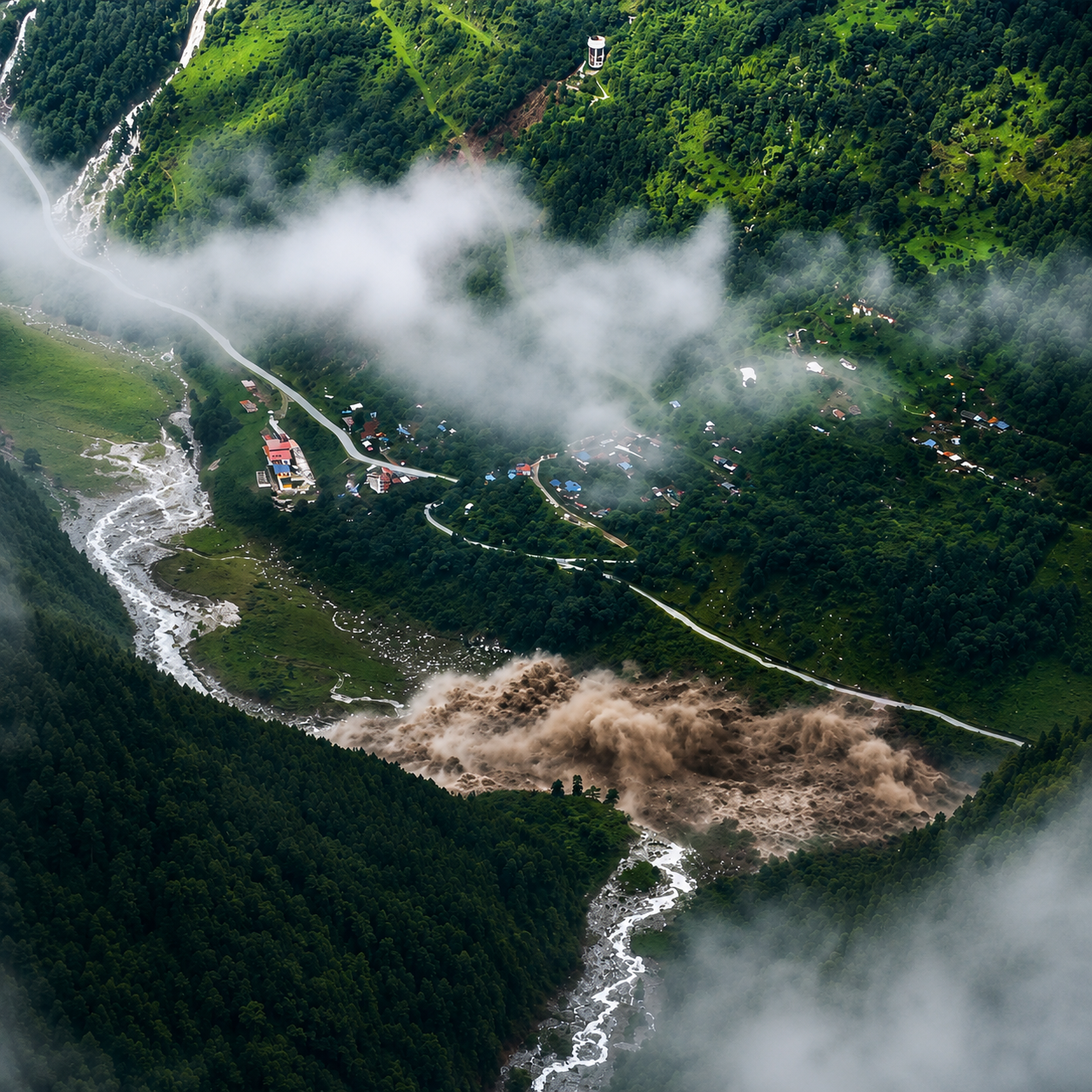
The Himalayan region is facing one of its deadliest disasters of 2026 after a sudden and destructive flash flood swept through communities along the Nepal-Tibet border on August 26.
Powerful torrents of water, mud, rocks and debris surged through mountain valleys, destroying homes, roads, bridges and other infrastructure and leaving thousands of people displaced or unaccounted for.
Video footage accompanying this report shows the scale of the destruction caused by the flood, including fast-moving water and debris tearing through affected areas. The images provide a stark view of how quickly conditions deteriorated in the mountainous region.
According to the latest reports available on August 28, more than 390 people have died across Nepal and Tibet, while more than 1,400 people remain missing. Nepal accounts for the overwhelming majority of the reported casualties.
What Happened in Nepal?
The disaster began on August 26 in the Himalayan region near the Nepal-China border.
The flooding was particularly destructive around Rasuwa District and the Bhote Koshi River system, where an enormous volume of water and debris moved rapidly downstream.
Early reports raised questions about whether an earthquake had triggered the event. Subsequent analysis, however, pointed toward a major collapse of ice, rock and glacial material in the high Himalayas as the likely trigger for the sudden surge.
The flood behaved less like a conventional monsoon flood and more like a rapidly advancing wall of water and debris. Mountain settlements and infrastructure had little time to respond.
Nepal Flood Death Toll Continues to Rise
The human cost of the disaster remains difficult to determine because rescue teams are still searching through extensive mud and debris.
The latest reporting indicates that at least 389 people have been killed in Nepal, with approximately 910 people still missing. Tibet has separately reported three deaths and hundreds of people missing.
The numbers are expected to change as search teams reach areas that remain inaccessible.
Bodies have reportedly been recovered far downstream after being carried through interconnected river systems. This has made identification and casualty accounting particularly challenging.
For families waiting for information about relatives, the uncertainty has added another painful dimension to an already devastating disaster.
Foreign Nationals Among Those Missing
The disaster has also affected international travelers.
Several foreign nationals were in the region for trekking, tourism, work and religious journeys, including people traveling toward Mount Kailash and the Kailash Mansarovar pilgrimage route.
Reports indicate that missing people include citizens from India, the United States, Britain, Australia, Canada and several other countries.
The presence of foreign travelers has also made the disaster an international emergency, with governments and diplomatic missions attempting to establish contact with their citizens.
Roads and Bridges Destroyed
The Catastrophic flooding has caused widespread infrastructure damage across the mountain region.
Roads and bridges that connect remote settlements have been damaged or swept away, complicating rescue operations and isolating communities.
The destruction of transportation links is especially serious in mountainous Nepal, where narrow valleys and difficult terrain already make emergency access challenging.
Rescue teams have therefore relied heavily on helicopters and other emergency resources to reach isolated areas and evacuate survivors.
The damage is also affecting economic activity, tourism and cross-border movement between Nepal and Tibet.
New Flood Threat Raises Concern
The disaster may not be over.
Nepal and China have warned of the possibility of additional flooding from newly formed or debris-blocked lakes in the Himalayan region.
One barrier lake has formed in connection with the Bhote Koshi River system, raising concerns that a sudden breach could send another surge downstream. Chinese authorities have also warned about another potentially dangerous lake near the border.
Authorities have consequently urged people in vulnerable downstream areas to remain alert and avoid unnecessary travel near potentially dangerous river corridors.
This secondary threat is particularly concerning because rescue personnel are already operating in areas affected by unstable terrain, damaged infrastructure and continuing rainfall.
Why Was the Flood So Destructive?
Nepal’s geography makes the country particularly vulnerable to sudden flooding and landslides.
The Himalayas contain enormous quantities of ice, snow and unstable rock at high elevations. When glaciers or ice-rock masses collapse, they can rapidly displace water and debris into steep valleys.
That material can gather enormous momentum as it moves downhill.
Climate scientists have also warned that a warming Himalayan environment is contributing to changes in glaciers and increasing risks associated with unstable mountain systems. The relationship between individual disasters and climate change is complex, however, and the precise causes of this particular event require continued scientific investigation.
Rescue Operations Continue
Search-and-rescue teams are working through areas covered by mud, rocks and debris in an effort to locate survivors and recover missing people.
Helicopters have been used for evacuations and to deliver assistance to communities cut off by damaged roads and bridges. The difficult terrain, destroyed infrastructure and continuing flood risks are making the operation extremely challenging.
Authorities are also monitoring river conditions and potential lake breaches as they attempt to prevent another wave of casualties.
For families of missing people, rescue operations remain a race against time.
Nepal Flood 2026: A Disaster Still Unfolding
The August 2026 Nepal flood is more than a story about a single burst of extreme weather. It is a rapidly developing humanitarian disaster affecting communities on both sides of the Nepal-Tibet border.
With more than 390 reported deaths and over 1,400 people still missing, the final human toll may remain uncertain for some time.
The destruction visible in flood footage is a reminder of how quickly Himalayan communities can be overwhelmed when water, ice, rock and debris converge in narrow mountain valleys.
As rescue teams continue searching and authorities monitor the risk of further flooding, attention remains focused on the people still missing and the communities facing the difficult task of rebuilding.
This article should be updated as Nepalese and Chinese authorities release revised casualty, missing-person and damage figures.
Reporting & Source Note
This report is based on the latest available reporting from international news agencies and regional sources. Casualty figures in an ongoing disaster can change as authorities recover and identify victims. Visual material should be independently attributed, dated and geolocated wherever possible.