There are roads that take you from A to B. Then there is the Cat and Fiddle Road a 10-mile stretch of tarmac between Buxton in Derbyshire and Macclesfield in Cheshire that has been thrilling drivers, terrifying nervous passengers, and inspiring motorcyclists for over two centuries. Built in 1823, this high-altitude single carriageway cuts through the Peak District National Park at a maximum elevation of 515 metres above sea level, offering some of the most dramatic scenery in northern England. It has earned the title of the UK’s most dangerous road. It has also earned a reputation as one of its most beautiful. This guide covers everything you need to know before you go the history, the hazards, the highlights, the road conditions, and the exciting new reason to stop at the summit.
What Exactly Is the Cat and Fiddle Road?
The Cat and Fiddle Road is formed by three connected A-roads: the A53, A54, and A537. Starting from the junction near Buxton Opera House in the south, it sweeps north-west through open moorland, past dry-stone walls and dramatic valley drops, before descending into Macclesfield. The road was built to carry goods lime from the Duke of Devonshire’s kilns at Grinlow, coal from Goyt’s Moss, and silk between the two market towns. Today it carries a very different type of traffic: tourists, motorcyclists, road trip enthusiasts, and anyone seeking one of England’s most visually stunning drives.
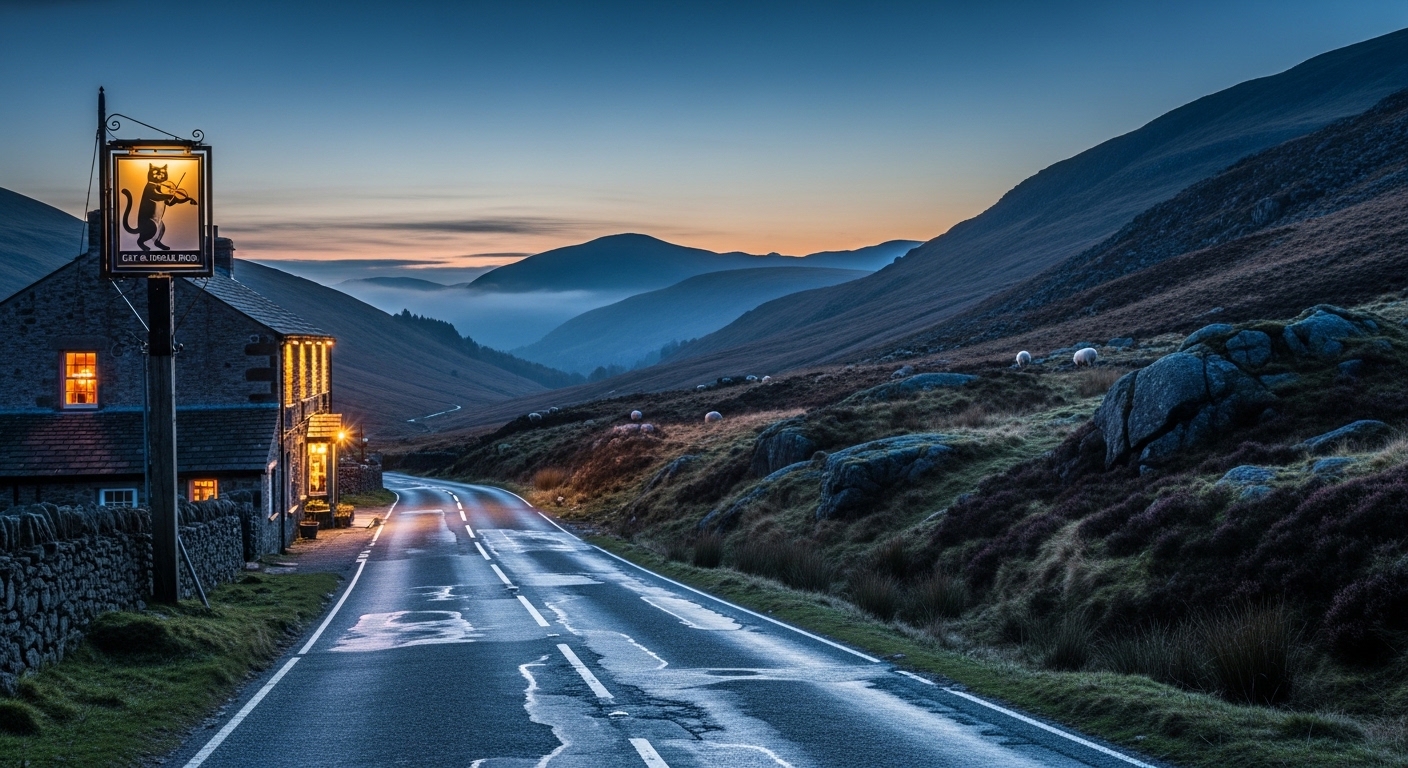
The road takes its name from the Cat and Fiddle Inn, which sits at the highest point of the route. Built in 1813 a decade before the road itself the inn became a landmark for travellers making the crossing. It is the second-highest pub location in England, after the Tan Hill Inn in North Yorkshire. The road runs 16.41 kilometres in total, with a maximum gradient of 8% on some of the steeper ramps and a speed limit of 50mph on the Macclesfield section, reduced from the national 60mph limit due to the road’s safety record.
Why Is the Cat and Fiddle Road So Dangerous?
In 2008, the Cat and Fiddle Road was officially named the most dangerous road in the United Kingdom. Between 2002 and 2011, the road recorded 79 serious or fatal crashes. In the three-year period between 2011 and 2013 alone, there were 34 reported accidents. These are striking numbers for a 10-mile stretch of rural road and they demand explanation.
The primary cause is not the road itself, but how people drive on it. Motorcyclists account for approximately 70% of casualties since 2001. The combination of sweeping bends that invite speed, blind corners that punish overconfidence, dry-stone walls that offer zero margin for error, and unpredictable upland weather creates a dangerous cocktail for those who underestimate the road. When motorcycle-related incidents are removed from the data, the road’s statistics become considerably less alarming pointing firmly at rider behaviour rather than road design.
Authorities have responded with several countermeasures. The speed limit on the section between Macclesfield and the Cat and Fiddle Inn was reduced to 50mph. Speed cameras were installed along the route. The road is regularly patrolled by unmarked police cars, motorcycles, and mobile speed camera vans particularly on summer weekends when motorcycle traffic peaks. A police aircraft is often deployed in conjunction with ground patrols. Motorcycle-friendly barriers have been installed at several high-risk points. The safety picture has improved meaningfully since 2015, though the road still demands full respect.
Driving the Cat and Fiddle Road: What to Expect
If you are approaching from Buxton, you begin on the A53 heading west before joining the A54 at Ladmanlow. This initial section is relatively open, with good sightlines and a gentler introduction to the moorland landscape. The road rises gradually, and the views across the Cheshire Plain begin to open up to the west. This section is manageable even in poor weather, and most drivers settle into the road’s rhythm here.
After Ladmanlow, the character of the road changes. A series of tight, technical bends demand proper positioning and smooth inputs. The road then flattens into a moorland section before climbing to the summit at the Cat and Fiddle Inn. This is the most exposed stretch of the route in winter, ice and snow can make the surface genuinely treacherous, and the weather can change within minutes at this altitude. From the summit, the descent toward Macclesfield features several dangerously blind bends that catch out drivers who carry too much speed from the flatter section above.
Without stopping, the full drive takes between 20 and 30 minutes. With stops for photographs, a visit to the summit, or simply to take in the views, allow at least an hour. The road is open year-round but is subject to occasional closures during severe blizzards and icy conditions a live webcam at the Cat and Fiddle Inn monitors the A537 westward and is worth checking before travelling in winter months.
The New Cat and Fiddle: England’s Highest Distillery
The Cat and Fiddle Inn closed as a traditional pub in 2014 after years of declining trade. For many regular visitors, it felt like the loss of the road’s heart. But since late 2025, the summit has found a compelling new identity. The Cat and Fiddle now operates as England’s highest-altitude distillery, sitting at 1,689 feet above sea level and it has transformed the summit stop from a nostalgic pause into a genuine destination.
The venue now functions as a bar, restaurant, and events space, with guided distillery tours and tasting sessions available. It also operates as a wedding venue, making use of the extraordinary moorland setting. Whether you are a motorcyclist stopping for a well-earned coffee after tackling the bends, a tourist completing the Buxton-to-Macclesfield run, or a couple considering a genuinely memorable venue for their wedding day, the Cat and Fiddle summit is now worth planning your visit around rather than simply passing through.
The Scenic Rewards: What You Will See
The Cat and Fiddle Road’s danger has always existed in tension with its beauty, and the beauty wins. From various points along the route, the views extend across the Greater Manchester conurbation to the north-west, the Peak District National Park to the east, and the broad sweep of the Cheshire Plain to the west. On a clear day, the visibility is extraordinary. The moorland landscape through which the road passes heather, peat bog, dry-stone walls, and open sky is as unchanged now as it was when Charles Rolls and Henry Royce used to test early Rolls-Royce cars on this very road in the early 1900s.
For photographers, the road offers exceptional opportunities particularly in early morning light or at golden hour, when the moorland takes on a rich amber quality and the distant city lights of Manchester begin to emerge on the horizon. The summit area around the Cat and Fiddle Inn provides the widest panoramic views and is the most popular stopping point. Lay-bys along the A537 descent toward Macclesfield offer additional vantage points for those willing to pull over safely.
Tips for Motorcyclists: Riding the Cat and Fiddle Safely
Given that motorcyclists make up the majority of road users seeking out the Cat and Fiddle Road and the majority of its casualties practical guidance for riders is worth stating clearly:
Respect the speed limit. The 50mph limit on the Macclesfield section is actively enforced. Unmarked police, mobile speed cameras, and aerial surveillance are all regularly deployed.
Treat blind bends as blind. The descent toward Macclesfield has several corners where oncoming traffic is not visible until the last moment. Position wide entry and apex only when the exit is fully clear.
Check the weather before you go. At 515 metres, conditions at the summit can be dramatically different from those at road level. Rain, low cloud, and ice arrive quickly and without much warning.
Ride your own ride. Group riding pressure to keep up with faster riders is a documented contributing factor in accidents on this road. Set your own pace regardless of who is behind you.
Stop at the summit. The Cat and Fiddle distillery and bar is now open. A break at the top is not just a safe practice it is one of the best stops on any road in northern England.
Road Conditions and When to Visit
The Cat and Fiddle Road is at its best from late spring through early autumn. May to September offers the most reliable weather window, the longest daylight hours for photography, and the best chance of clear panoramic views. Summer weekends bring the heaviest motorcycle traffic and the most active police presence. If you prefer a quieter experience, weekday mornings in June or September are ideal.
Winter visits are possible but demand proper preparation. Snow and ice at altitude can make the road impassable and genuinely dangerous. Occasional full closures occur during severe weather events. Before any winter journey, check the live webcam feed on the A537 near the Cat and Fiddle Inn for real-time road surface conditions. The road has no gritting priority equivalent to major A-roads, so frost can linger for hours after temperatures recover at lower elevations.
Final Verdict: Is the Cat and Fiddle Road Worth It?
Yes without question. The Cat and Fiddle Road’s reputation for danger is real, but it is a danger that rewards preparation and punishes recklessness. For the driver or rider who approaches it with appropriate respect, it delivers something genuinely rare: a road experience that is simultaneously challenging, visually extraordinary, historically rich, and now home to one of England’s most distinctive summit destinations.
Whether you are a motorcyclist planning your next great UK ride, a family on a Peak District road trip, a couple researching an unforgettable wedding venue, or simply someone who believes that the journey should be as memorable as the destination the Cat and Fiddle Road delivers. Plan it properly, drive it carefully, stop at the summit, and you will understand why this road has been drawing people to the Peak District since 1823.